Research University Press · A new kind of bookshelf
Books that grow
with the evidence.
A living book keeps the depth of a book and the ability to learn. Read a complete edition today. Follow its next chapter as the research changes.
Children
in the Age of AI
Human wisdom.
A world of possibility.

Collaboration · KindnessEdited by Freedom Cheteni, PhD
Our first living book
Raising Children
in the Age of AI
Human wisdom for a changing childhood. A substantial, illustrated companion to trust, respect, independence, collaboration, and kindness. Explore family scenarios, private reflections, and practical workshops, with the Parenting Journal close at hand.
12 chapters · 26 selected sources · 69,143 words
Our second book · The real student archive
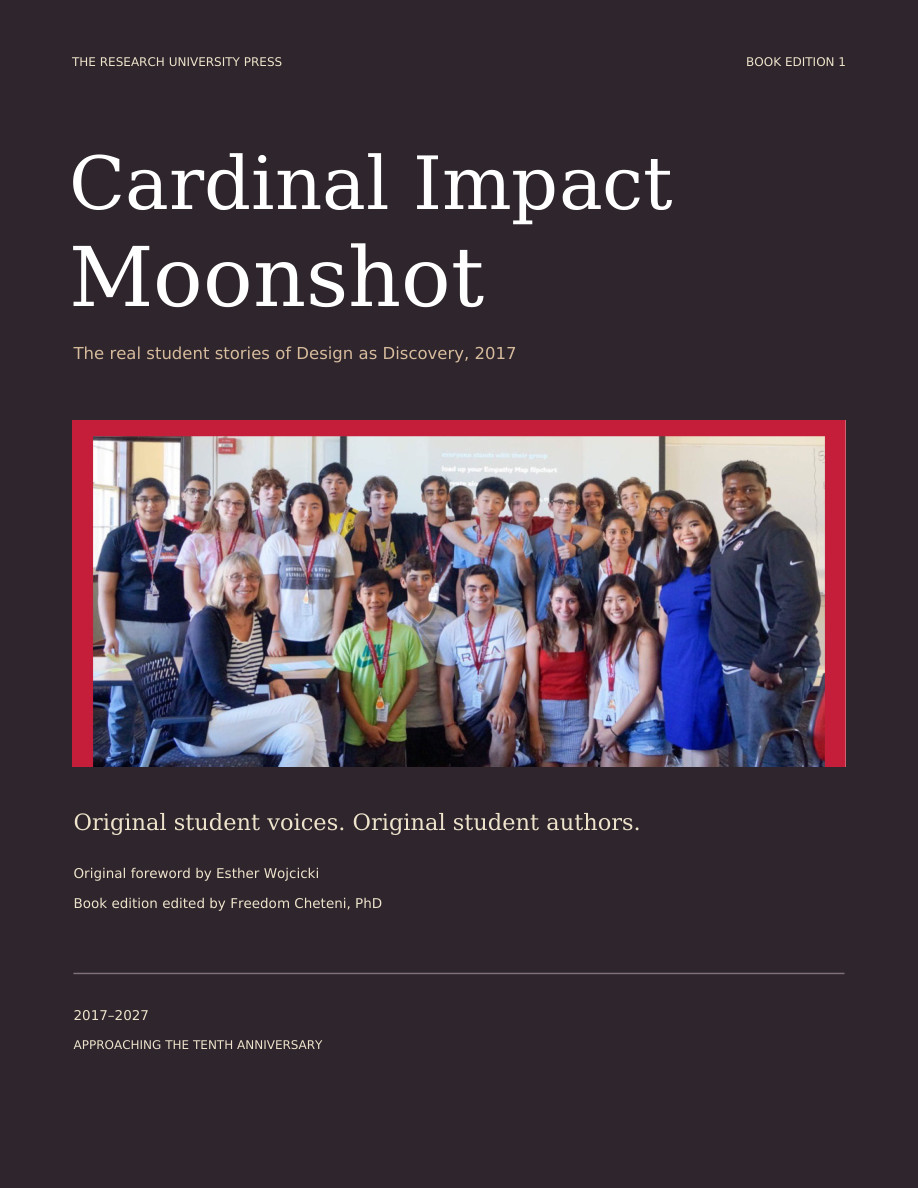
Cardinal Impact
Moonshot
Twenty-one real student profiles from the 2017 Design as Discovery course co-taught by Freedom Cheteni and Esther Wojcicki. The original student bylines, portraits, magazine pages and Esther’s original foreword remain preserved.
21 student profiles · 52 original pages · 2017–2027 anniversary
From research to a readable book
A clear path.
An open future.
- 01
Shape the book
Define its purpose, audience, chapters, and human editorial responsibility.
- 02
Keep the evidence close
Find journal research, inspect its scope, and connect each chapter to its sources.
- 03
Write & refine
Edit the manuscript, explain revisions, and work with an authorized update agent.
- 04
Publish & preserve
Release a reading edition and EPUB. Keep stable editions and a visible change history.
The living-book authoring desk
One place to carry
a book all the way through.
Start a private book, develop chapters, select research, save a manuscript, and publish an edition. Authors control whether an agent may publish future updates.
Start writing →