Source-preserved book edition 1 · Original publication July 27, 2017

Cardinal Impact
Moonshot

Twenty-one students. Their classmates’ words. The original stories.

Course co-taught by Freedom Cheteni and Esther Wojcicki · Book edition edited by Freedom Cheteni, PhD

How this edition preserves the students’ accounts

Freedom Cheteni confirms that these are real students and accounts from the course he co-taught with Esther Wojcicki in 2017. The original stories, bylines and pages are preserved. The students’ ideas, predictions, statistics and proposed projects speak from 2017. This edition does not supply unreported later outcomes or treat every contemporary claim as a verified present-day finding.

Readable text follows the original columns. Layout-only template labels and slide-number placeholders are omitted from the transcript. The original pages remain available alongside it. Source spellings, opinions and historical claims remain attributed to the original authors.

Republication authorized by Freedom Cheteni. Original student authors, photographers and other contributors retain their credits and underlying rights. No Creative Commons license is asserted for the original magazine.

Original page 3 · The students’ own introduction

Team note

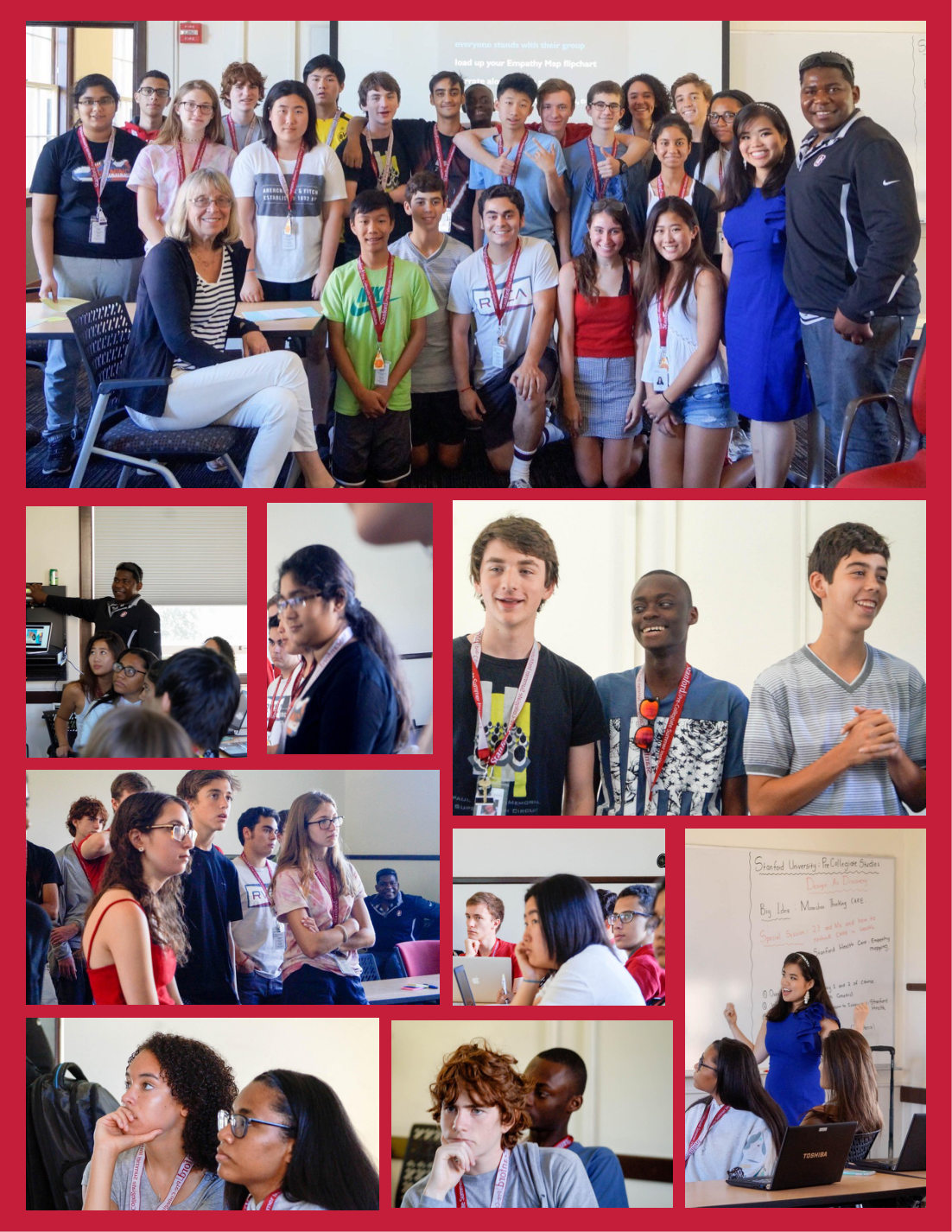
On July 18th, less than two weeks ago, a group of intelligent, passionate, and hard-working teenagers at The VR School met in the Stanford Pre-Collegiate Design as Discovery dual enrollment honors course. Together we have each found a passion that is unique to us and we have committed to impacting the world through this passion. We conducted days of interviews, research, writing then, more interviews, more research, and more writing, in order to create the content that you are reading now. Through Freedom Cheteni’s and Esther Wojcicki’s guidance, along with our collaborations with Stanford University d.school, 23andMe, La Nación Latin America, Palo Alto High Media Center, Google, and ISSUU, we present to you the first print edition of Cardinal Impact Moonshot. The purpose of this specific magazine is to highlight the passions and aspirations of this team of driven students, brought together through Stanford VR School. These passions and aspirations include topics such as healthcare, education, artificial intelligence, genetic engineering, and mental health. Us students have each utilized our unique talents to put this excellent magazine together. We present to you: VR School Stanford Pre-Collegiate Cardinal Impact Moonshot. VR School Stanford Pre-Collegiate Studies Design as Discovery: Peace Technology and Design Thinking Students

Open original page 3 ↗

Original page 4 · Reproduced from the 2017 magazine

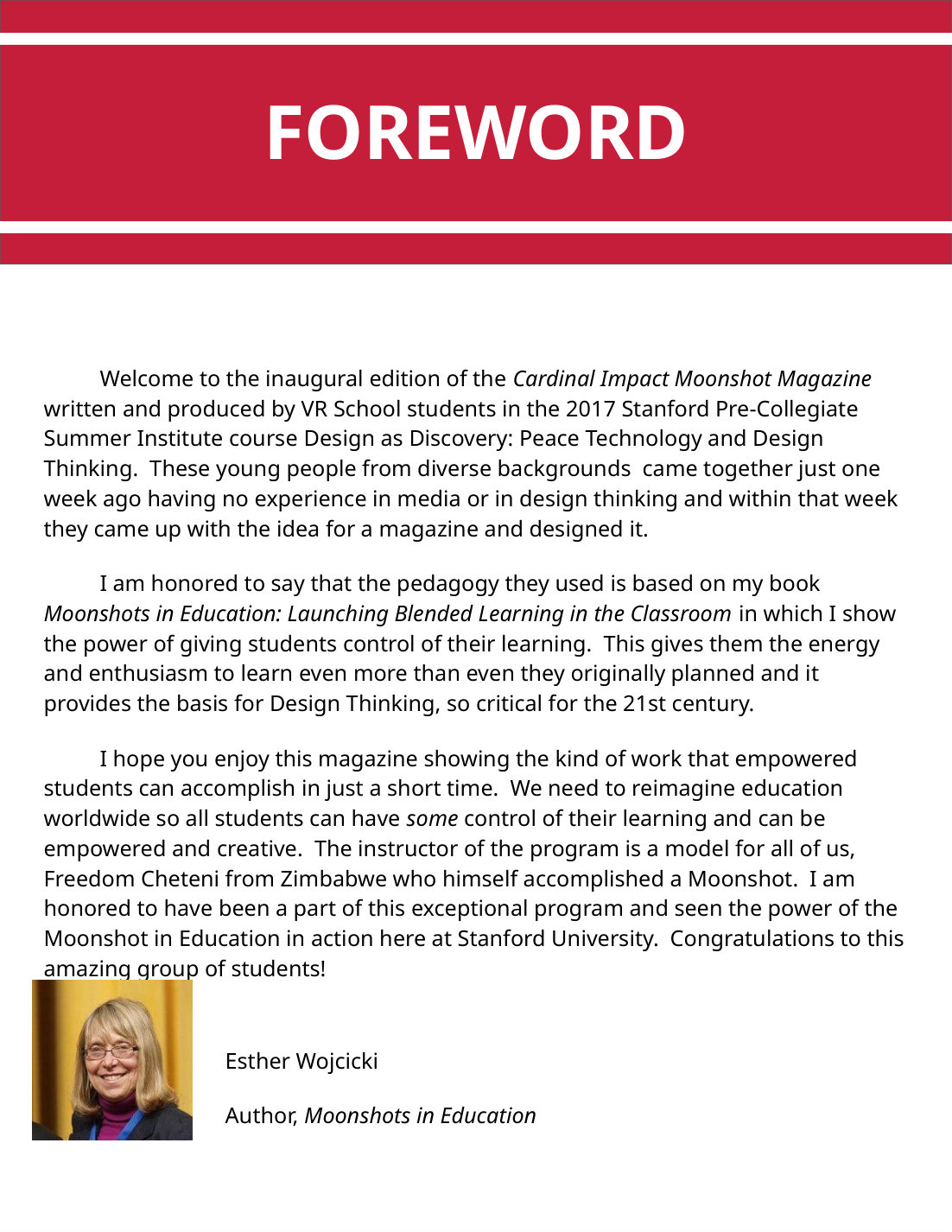
Foreword

Welcome to the inaugural edition of the Cardinal Impact Moonshot Magazine written and produced by VR School students in the 2017 Stanford Pre-Collegiate Summer Institute course Design as Discovery: Peace Technology and Design Thinking. These young people from diverse backgrounds came together just one week ago having no experience in media or in design thinking and within that week they came up with the idea for a magazine and designed it. I am honored to say that the pedagogy they used is based on my book Moonshots in Education: Launching Blended Learning in the Classroom in which I show the power of giving students control of their learning. This gives them the energy and enthusiasm to learn even more than even they originally planned and it provides the basis for Design Thinking, so critical for the 21st century. I hope you enjoy this magazine showing the kind of work that empowered students can accomplish in just a short time. We need to reimagine education worldwide so all students can have some control of their learning and can be empowered and creative. The instructor of the program is a model for all of us, Freedom Cheteni from Zimbabwe who himself accomplished a Moonshot. I am honored to have been a part of this exceptional program and seen the power of the Moonshot in Education in action here at Stanford University. Congratulations to this amazing group of students!

Open the original foreword ↗

01 · Original source p. 7

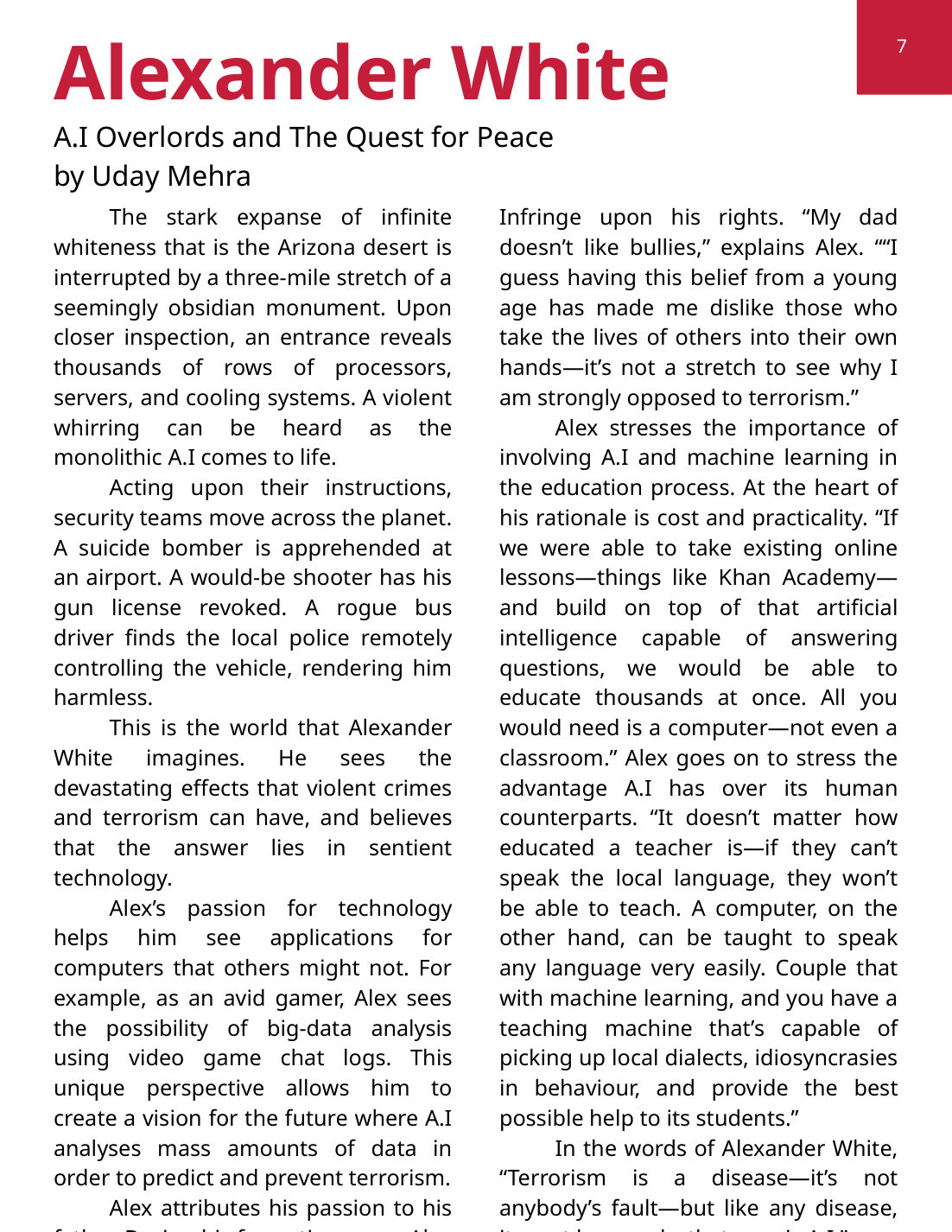
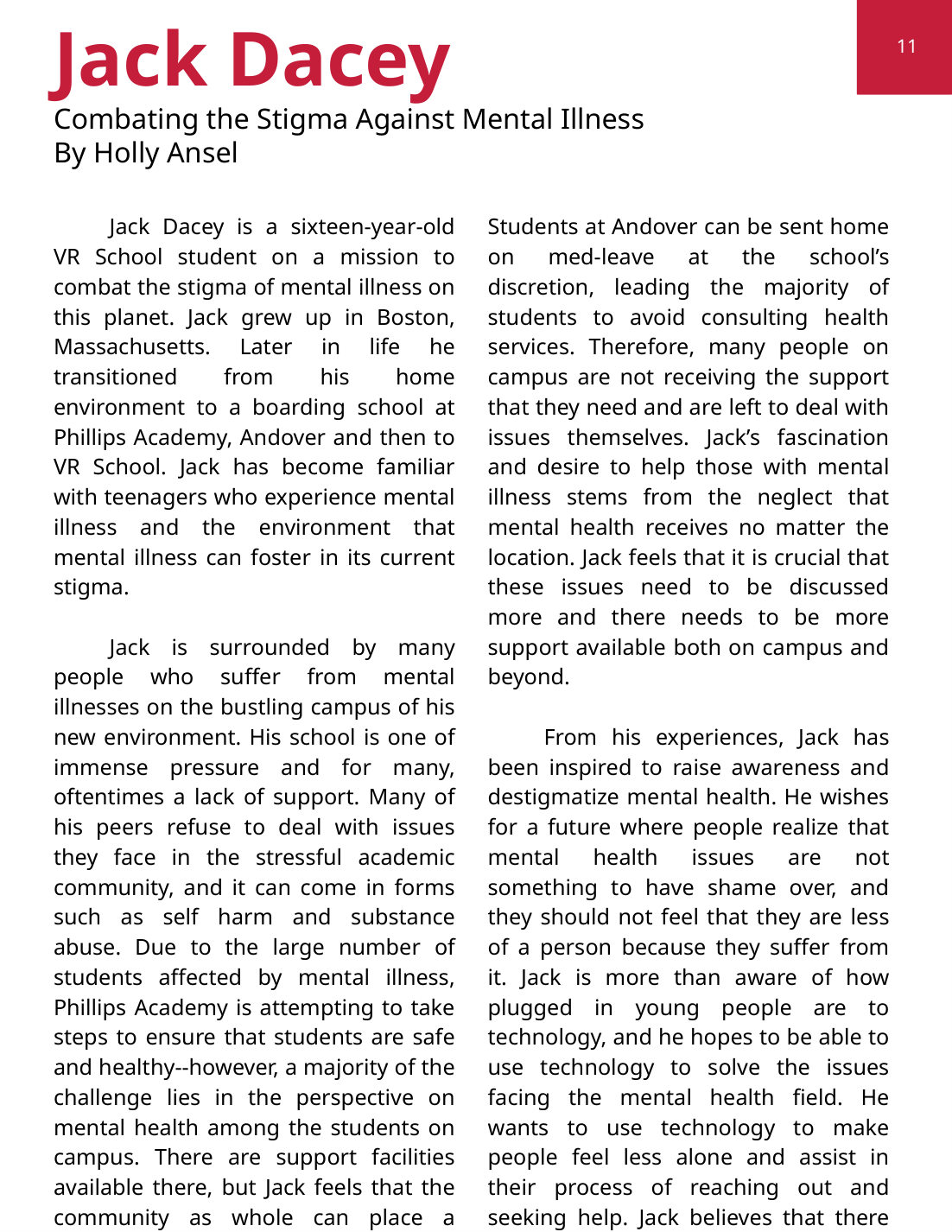
Alexander White

A.I Overlords and The Quest for Peace
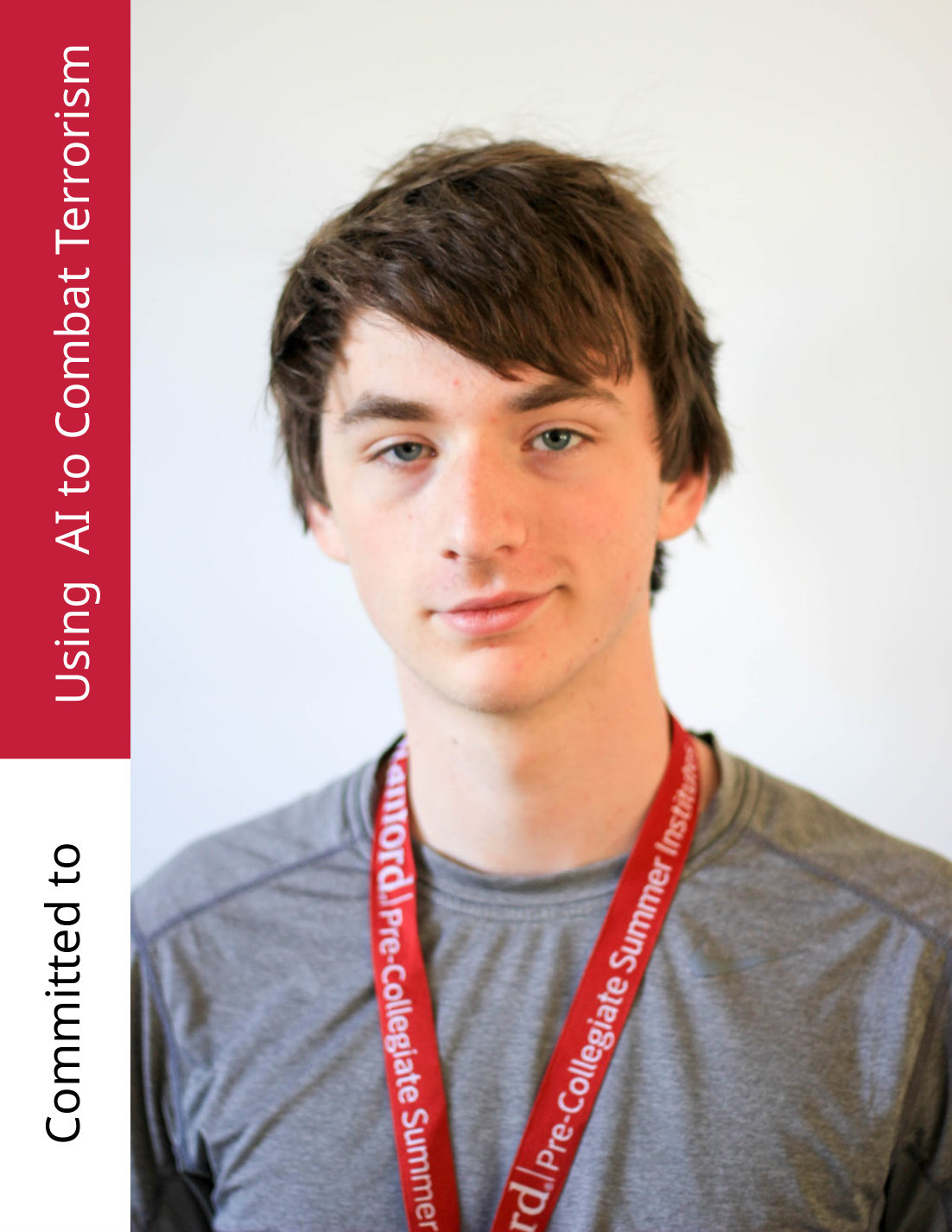
Original 2017 portrait page of Alexander White

The stark expanse of infinite whiteness that is the Arizona desert is interrupted by a three-mile stretch of a seemingly obsidian monument. Upon closer inspection, an entrance reveals thousands of rows of processors, servers, and cooling systems. A violent whirring can be heard as the monolithic A.I comes to life. Acting upon their instructions, security teams move across the planet. A suicide bomber is apprehended at an airport. A would-be shooter has his gun license revoked. A rogue bus driver finds the local police remotely controlling the vehicle, rendering him harmless. This is the world that Alexander White imagines. He sees the devastating effects that violent crimes and terrorism can have, and believes that the answer lies in sentient technology. Alex’s passion for technology helps him see applications for computers that others might not. For example, as an avid gamer, Alex sees the possibility of big-data analysis using video game chat logs. This unique perspective allows him to create a vision for the future where A.I analyses mass amounts of data in order to predict and prevent terrorism. Alex attributes his passion to his father. During his formative years, Alex was taught to stand up to anyone who tried to

Infringe upon his rights. “My dad doesn’t like bullies,” explains Alex. ““I guess having this belief from a young age has made me dislike those who take the lives of others into their own hands—it’s not a stretch to see why I am strongly opposed to terrorism.” Alex stresses the importance of involving A.I and machine learning in the education process. At the heart of his rationale is cost and practicality. “If we were able to take existing online lessons—things like Khan Academy—and build on top of that artificial intelligence capable of answering questions, we would be able to educate thousands at once. All you would need is a computer—not even a classroom.” Alex goes on to stress the advantage A.I has over its human counterparts. “It doesn’t matter how educated a teacher is—if they can’t speak the local language, they won’t be able to teach. A computer, on the other hand, can be taught to speak any language very easily. Couple that with machine learning, and you have a teaching machine that’s capable of picking up local dialects, idiosyncrasies in behaviour, and provide the best possible help to its students.” In the words of Alexander White, “Terrorism is a disease—it’s not anybody’s fault—but like any disease, it must be cured—that cure is A.I.”

View the original article pageOriginal article page 7: A.I Overlords and The Quest for Peace, by Uday Mehra

Original student journalism, July 2017. His father’s opposition to bullying becomes a concern with public safety. The opening desert scene in the original article is explicitly Alexander’s imagined future. Preserved source p. 7 ↗
02 · Original source p. 9

Uday Mehra

Safe Artificial Intelligence

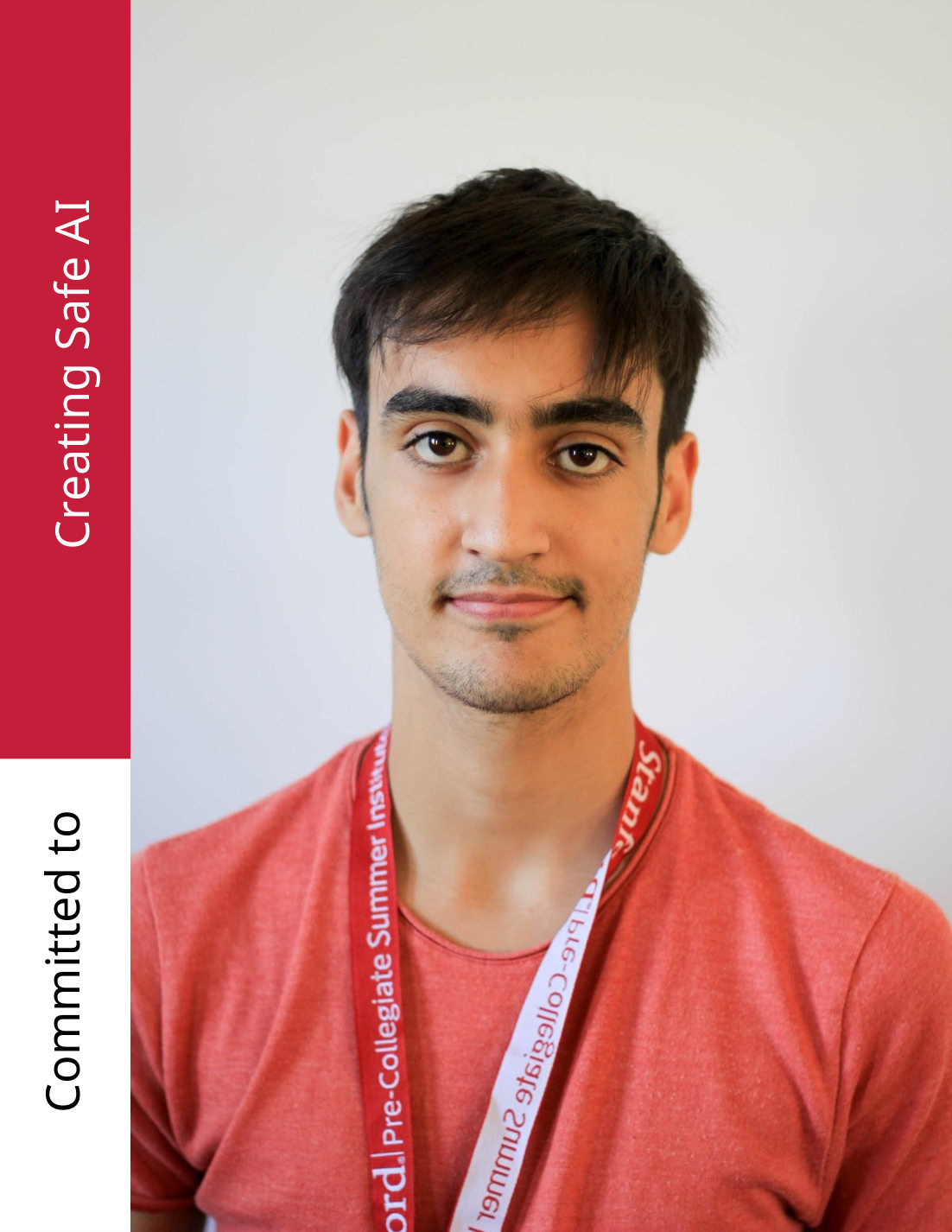
Original 2017 portrait page of Uday Mehra

“Why do we really need Artificial Intelligence?” Uday, a VR student at the Stanford Pre-Collegiate Studies Design as Discovery course taught by world renowned professor Freedom Cheteni, asks this question, as he wonders about the world's fascination about A.I.’s.” Perhaps, the world doesn’t really need A.I. Like, can’t all the work be done by humans anyway”? Uday raises a good point. With 7 Billion people on this planet, we could easily create a world where A.I. is never even needed. With non-sentient computers, we could survive and even thrive, moving to other planets. Although we may miss an opportunity to have A.I. work for us, Uday says that we don’t need A.I. at a sentient level at all.

In fact, in agreement with Uday, many studies have been done on safe A.I., and all of them have shown that not only are they smarter than humans, or at least would be when created, but they are also more able than us. When pitted against humans in battles of purely intelligence, the A.I. will win every single time. For example, one study was done on an A.I. in a box. The A.I. (a test subject) was connected with one person outside the box,

who had only goal, keep the A.I. inside the box. Nine times out of ten however, the test subject convinced the person to let them have internet access, with which an A.I. could do lethal and terrifying things, like shutting down all kinds of global trade, overloading websites so that people are unable to go to them, and possibly even getting into people's emails.

So, based on the fact that A.I. can generally outthink humans, and they have a lot more power than us, especially on the internet, Uday thinks that we should not ever even make A.I. sentient enough to either replace or destroy us.

But how can we stop A.I.? Uday thinks that it is essential to stop people from building fully sentient A.I. in the first place. However, if that fails, Uday wants a more permanent solution. That solution would be a kill switch, that instantly shuts down all artificial intelligences on the planet. This way, no matter what happens to the A.I. or what they do, they can be destroyed. In the wise words of Uday Mehra“They may be able to outsmart humans, but they cannot outsmart death”.

View the original article pageOriginal article page 9: Safe Artificial Intelligence, by Alexander White

Original student journalism, July 2017. A real student questions the purpose and safety of AI. The article’s predictions and reported experiment are preserved as 2017 student journalism. Preserved source p. 9 ↗

03 · Original source p. 11

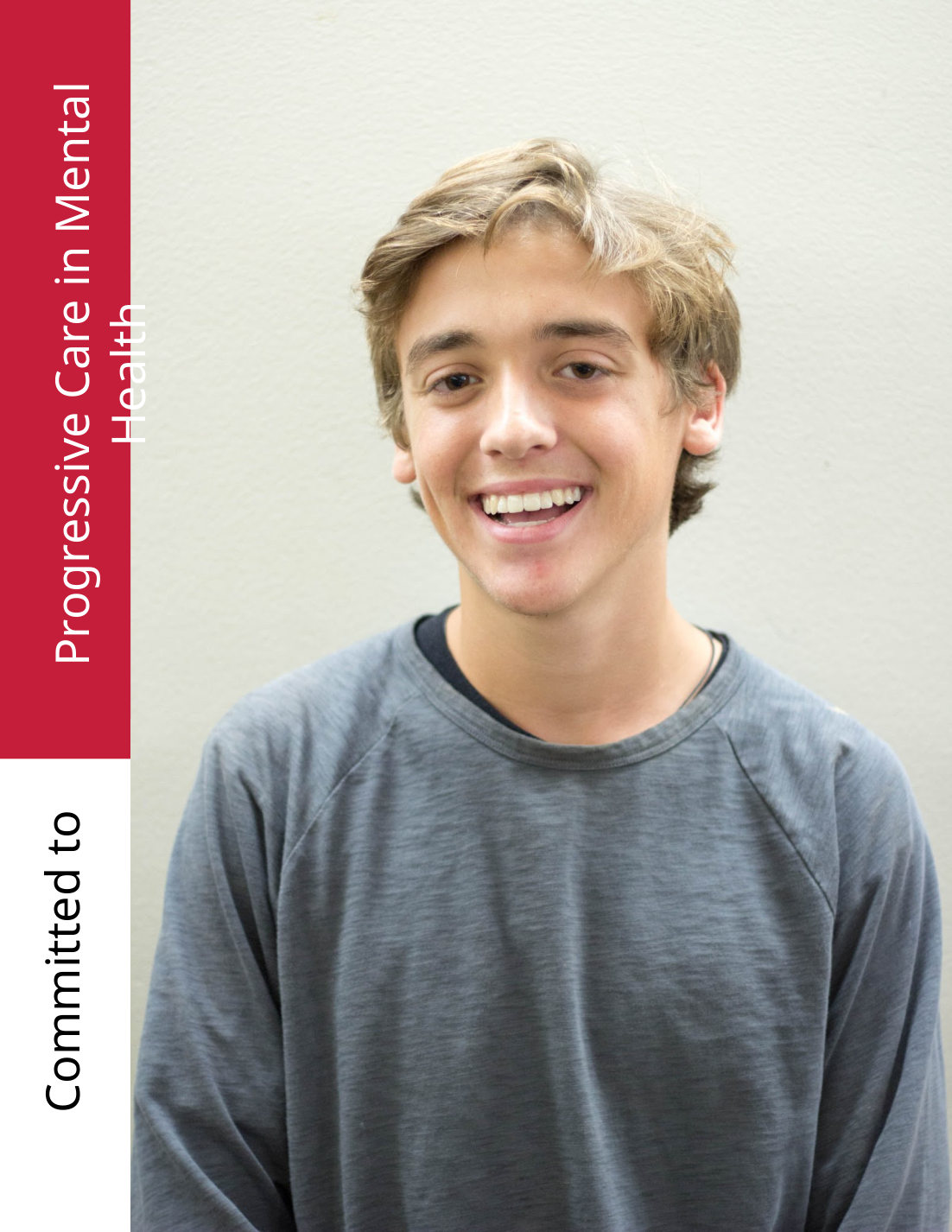
Jack Dacey

Combating the Stigma Against Mental Illness

Original 2017 portrait page of Jack Dacey

Jack Dacey is a sixteen-year-old VR School student on a mission to combat the stigma of mental illness on this planet. Jack grew up in Boston, Massachusetts. Later in life he transitioned from his home environment to a boarding school at Phillips Academy, Andover and then to VR School. Jack has become familiar with teenagers who experience mental illness and the environment that mental illness can foster in its current stigma.

Jack is surrounded by many people who suffer from mental illnesses on the bustling campus of his new environment. His school is one of immense pressure and for many, oftentimes a lack of support. Many of his peers refuse to deal with issues they face in the stressful academic community, and it can come in forms such as self harm and substance abuse. Due to the large number of students affected by mental illness, Phillips Academy is attempting to take steps to ensure that students are safe and healthy--however, a majority of the challenge lies in the perspective on mental health among the students on campus. There are support facilities available there, but Jack feels that the community as whole can place a stigma on seeking out help and admitting when they are struggling.

Students at Andover can be sent home on med-leave at the school’s discretion, leading the majority of students to avoid consulting health services. Therefore, many people on campus are not receiving the support that they need and are left to deal with issues themselves. Jack’s fascination and desire to help those with mental illness stems from the neglect that mental health receives no matter the location. Jack feels that it is crucial that these issues need to be discussed more and there needs to be more support available both on campus and beyond.

From his experiences, Jack has been inspired to raise awareness and destigmatize mental health. He wishes for a future where people realize that mental health issues are not something to have shame over, and they should not feel that they are less of a person because they suffer from it. Jack is more than aware of how plugged in young people are to technology, and he hopes to be able to use technology to solve the issues facing the mental health field. He wants to use technology to make people feel less alone and assist in their process of reaching out and seeking help. Jack believes that there needs to be a change from the current status quo, and he would like to play a part in that.

View the original article pageOriginal article page 11: Combating the Stigma Against Mental Illness, by Holly Ansel

Original student journalism, July 2017. Jack’s mission concerns stigma and seeking support. The article reports his perspective on his school community in 2017. Preserved source p. 11 ↗

04 · Original source p. 13

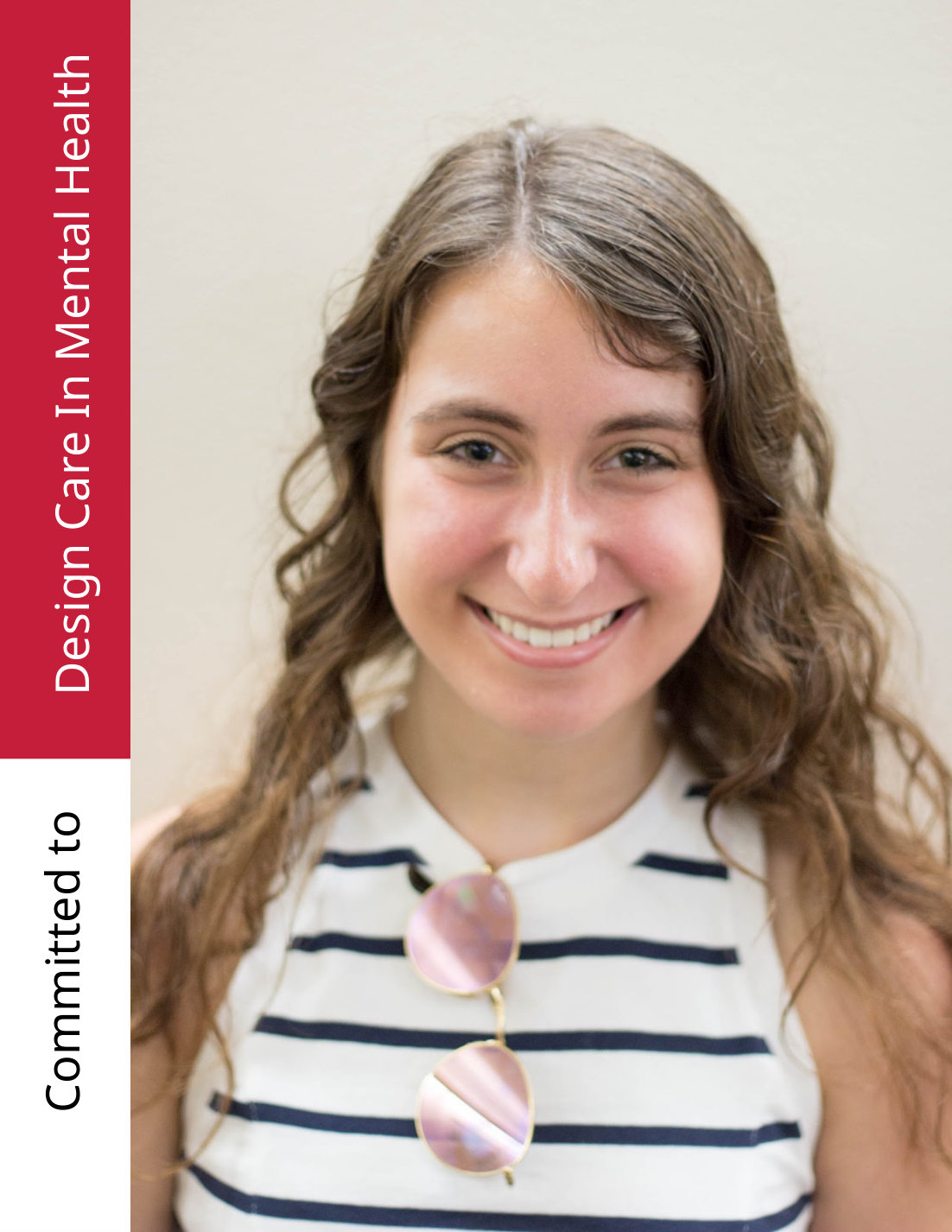
Holly Ansel

A Refreshing Perspective on Mental Health

Original 2017 portrait page of Holly Ansel

Holly Ansel holds fond memories of her early years spent in California and is excited to be part of The VR School. Born there, she spent her first and “best” years there until her move to New York at a young age. Holly expresses how fortunate she was to receive emotional support from family and her new teachers throughout her transition to the East Coast. However, she knows that often there is not that level of support during many life-changing events that young people experience. Holly says that the move, at so young, helped her in stepping forward when she was struggling or in need of help as the years progressed. In the process of her move, she saw the benefits of talk-therapy and the outcomes that can result when a person seeks, and works through the issues they experience in life. She claims that, “The skills I learned from that move, at such a young age, prepared me more than I could have known for both my future and life as a whole. ” Holly explains that mental health as a whole is a topic talked about behind closed doors or not at all. If anything, the topic of mental health is one shoved under the rug and ignored—often until it is too late. In her environment, Holly saw from a very young age the clear stigma that mental health is subject to, a negative and embarrassing part of many lives.

According to Holly, stigma is even stronger among her classmates and teenagers as a whole in her high school, Friends Academy. “You see, a problem with a lot of people is that the perception of mental health is linked with weakness; but anyone who has experienced it firsthand knows there is nothing further from the truth. For me, the most important thing is to understand that everybody struggles, and mental health is not something that should be ignored. It should be destigmatized.” Without stigma, the possibilities and goals our society can achieve are virtually limitless. In removing negativity and shame for those who deal with mental health, the embarrassment that many feel when experiencing mental health issues will no longer prevent people from dealing with a mental health issue. Holly believes that if people were more open and understanding to the subject of mental health, then everybody in our culture has the opportunity to benefit—regardless if they have dealt with any mental health issues. She knows the heights that this field can achieve are immeasurable. Holly aims to be more than active in the fruition of a new perspective on mental health.

View the original article pageOriginal article page 13: A Refreshing Perspective on Mental Health, by Jack Dacey

Original student journalism, July 2017. Holly describes the importance of family and teacher support during a move. Preserved source p. 13 ↗

05 · Original source p. 15

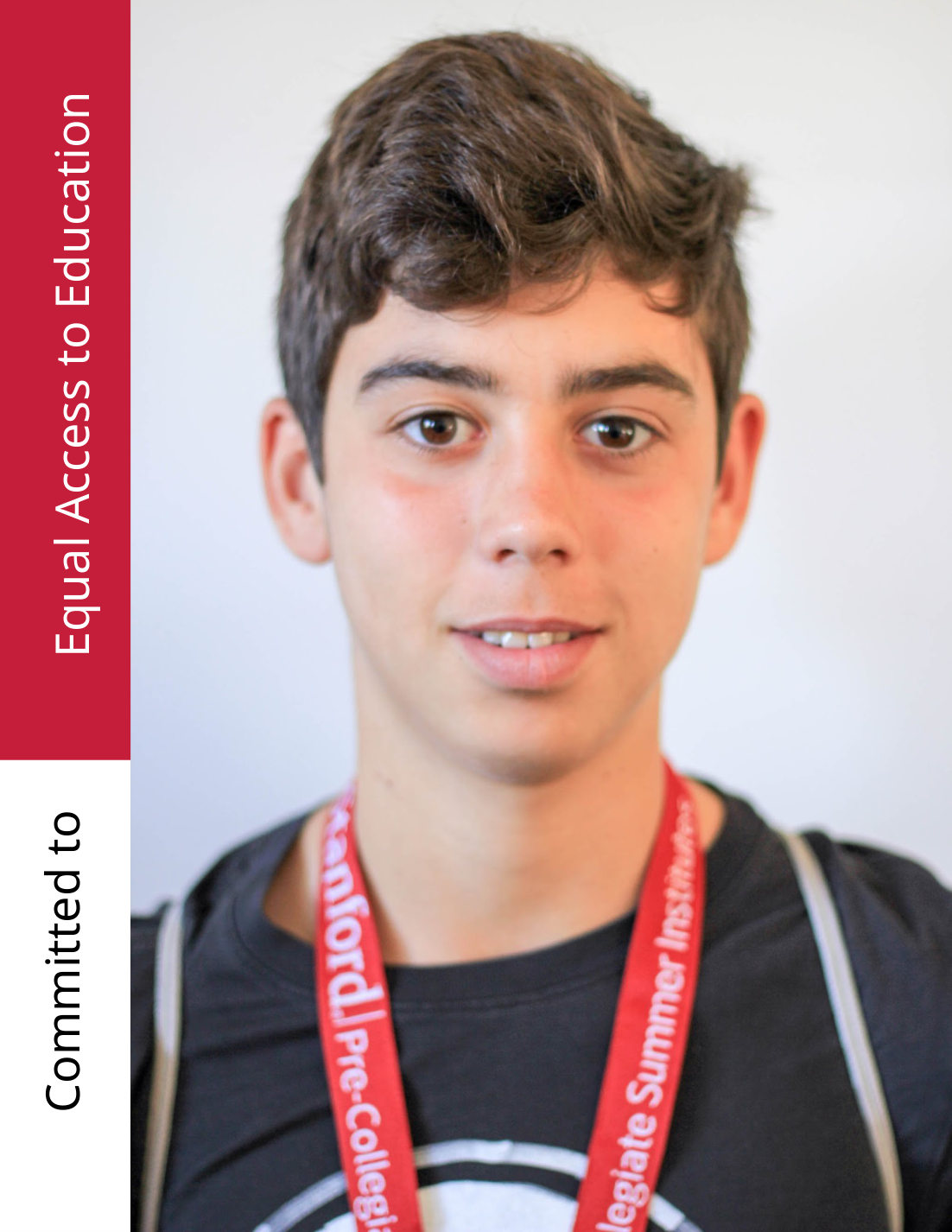
Nico Monsalve

Young Teenager Striving to Create Equal Educational Opportunities for All

Original 2017 portrait page of Nico Monsalve

In a world where 57 million children do not have access to proper education, Nico Monsalve, a 15 year old from Los Altos, CA, is passionate about supplying underprivileged students in 3rd world countries with equal access to education.

Monsalve is a sophomore at the VR School Stanford PreCollegiate program. During Spring Break in 2017, he visited Guatemala on vacation with his family and met Dax, a 16 year old local. While conversing, Dax explained to Monsalve how he left school when he was 8 so that he could contribute to supporting his family due to the poverty his country faces.

From this experience, he is determined to tackle the issue of the lack of exposure that children in underdeveloped countries have to education. He discovered his desire to solve this problem after his encounter with the local Guatemalan.

While on this trip, what he witnessed, in regards to Dax and his country, was shocking because of their unfortunate situation. He found himself wondering why these countries are not exposed to the importance of education.

In a world where those that are privileged have access not only to good education but at times even free educational courses like Khan Academy.

Recently, Monsalve joined Stanford’s Pre-Collegiate Studies program for a computer science course, Design as Discovery. He wants to make a difference in this world by helping the children in other communities be able to afford education through peace technology.

In closing, Monsalve is still working on a solution but is facing challenges as these countries are poverty stricken and therefore have no access to technology and resources. He hopes to work with the students at Stanford University to solve this issue.

View the original article pageOriginal article page 15: Young Teenager Striving to Create Equal Educational Opportunities for All, by Zahra Petiwala

Original student journalism, July 2017. Nico’s encounter with Dax becomes a question about educational access. His project is presented as an aspiration at the time. Preserved source p. 15 ↗

06 · Original source p. 17

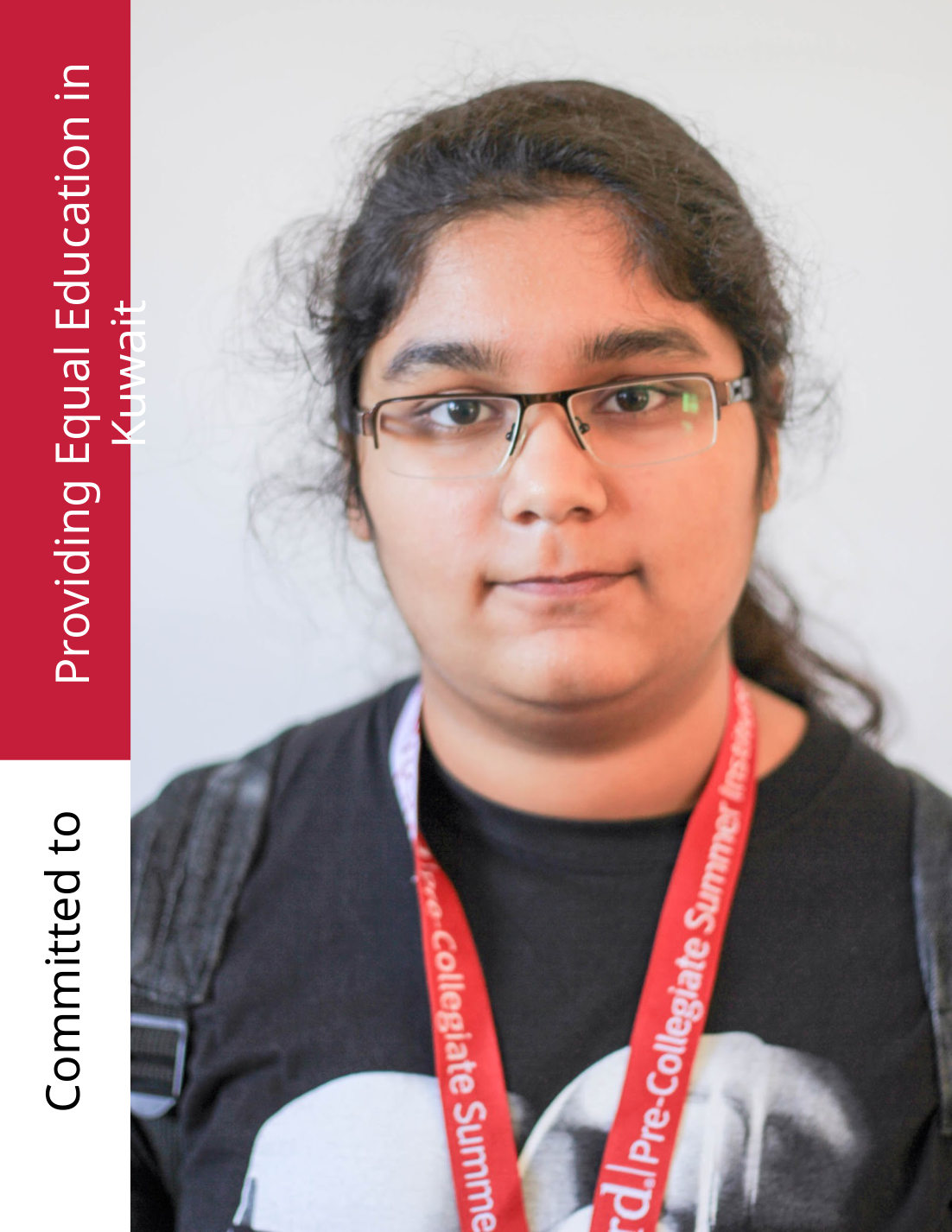
Zahra Petiwala

Equal Education in Kuwait

Original 2017 portrait page of Zahra Petiwala

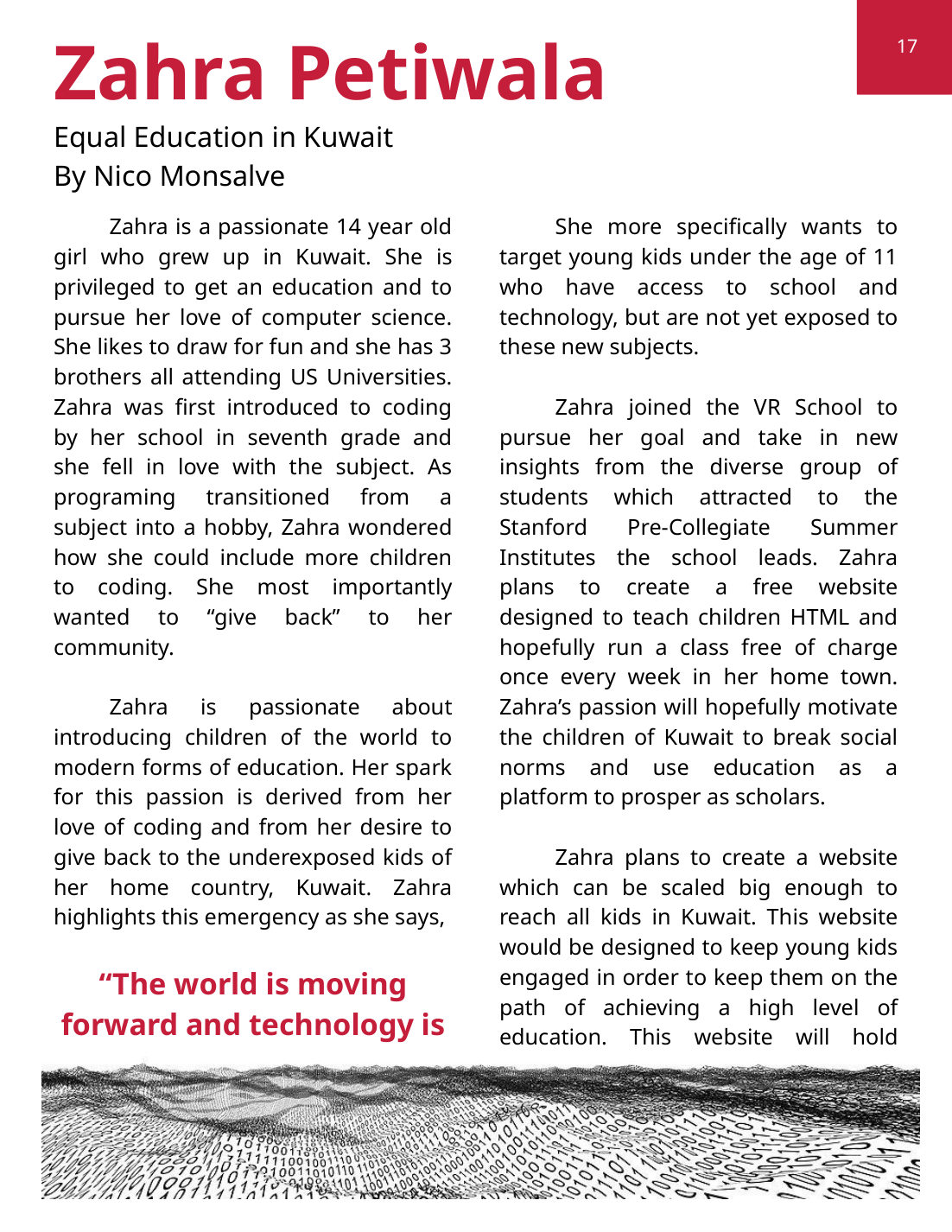
Zahra is a passionate 14 year old girl who grew up in Kuwait. She is privileged to get an education and to pursue her love of computer science. She likes to draw for fun and she has 3 brothers all attending US Universities. Zahra was first introduced to coding by her school in seventh grade and she fell in love with the subject. As programing transitioned from a subject into a hobby, Zahra wondered how she could include more children to coding. She most importantly wanted to “give back” to her community.

Zahra is passionate about introducing children of the world to modern forms of education. Her spark for this passion is derived from her love of coding and from her desire to give back to the underexposed kids of her home country, Kuwait. Zahra highlights this emergency as she says,

“The world is moving forward and technology is the only means for our current generation to keep up.”

She more specifically wants to target young kids under the age of 11 who have access to school and technology, but are not yet exposed to these new subjects.

Zahra joined the VR School to pursue her goal and take in new insights from the diverse group of students which attracted to the Stanford Pre-Collegiate Summer Institutes the school leads. Zahra plans to create a free website designed to teach children HTML and hopefully run a class free of charge once every week in her home town. Zahra’s passion will hopefully motivate the children of Kuwait to break social norms and use education as a platform to prosper as scholars.

Zahra plans to create a website which can be scaled big enough to reach all kids in Kuwait. This website would be designed to keep young kids engaged in order to keep them on the path of achieving a high level of education. This website will hold courses taught in HTML to give kids a solid foundation for future languages they choose to pursue.

View the original article pageOriginal article page 17: Equal Education in Kuwait, by Nico Monsalve

Original student journalism, July 2017. Zahra connects a love of coding with a plan to teach younger children in Kuwait. Preserved source p. 17 ↗
07 · Original source p. 19

Jasmine Davis

Social Justice Through a Lens

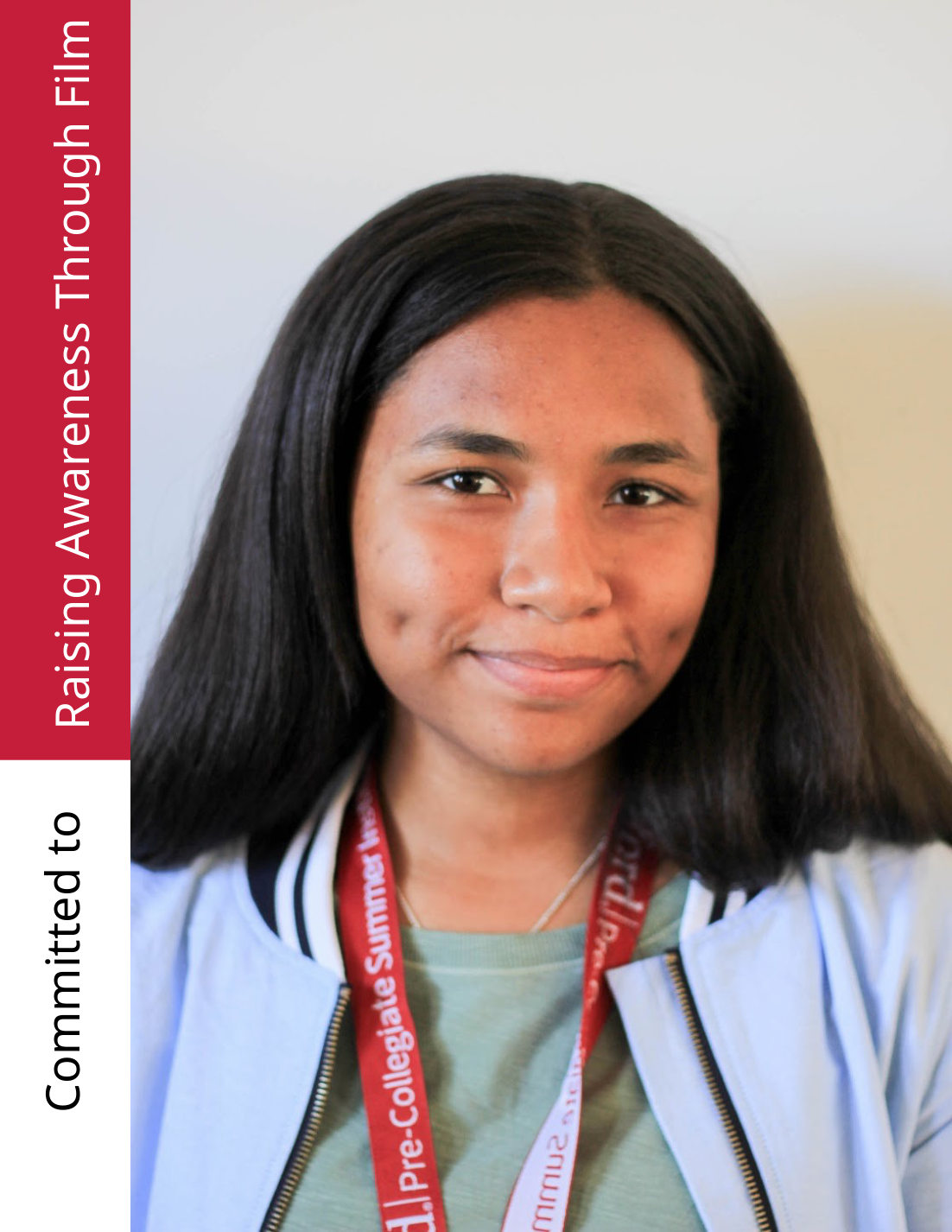
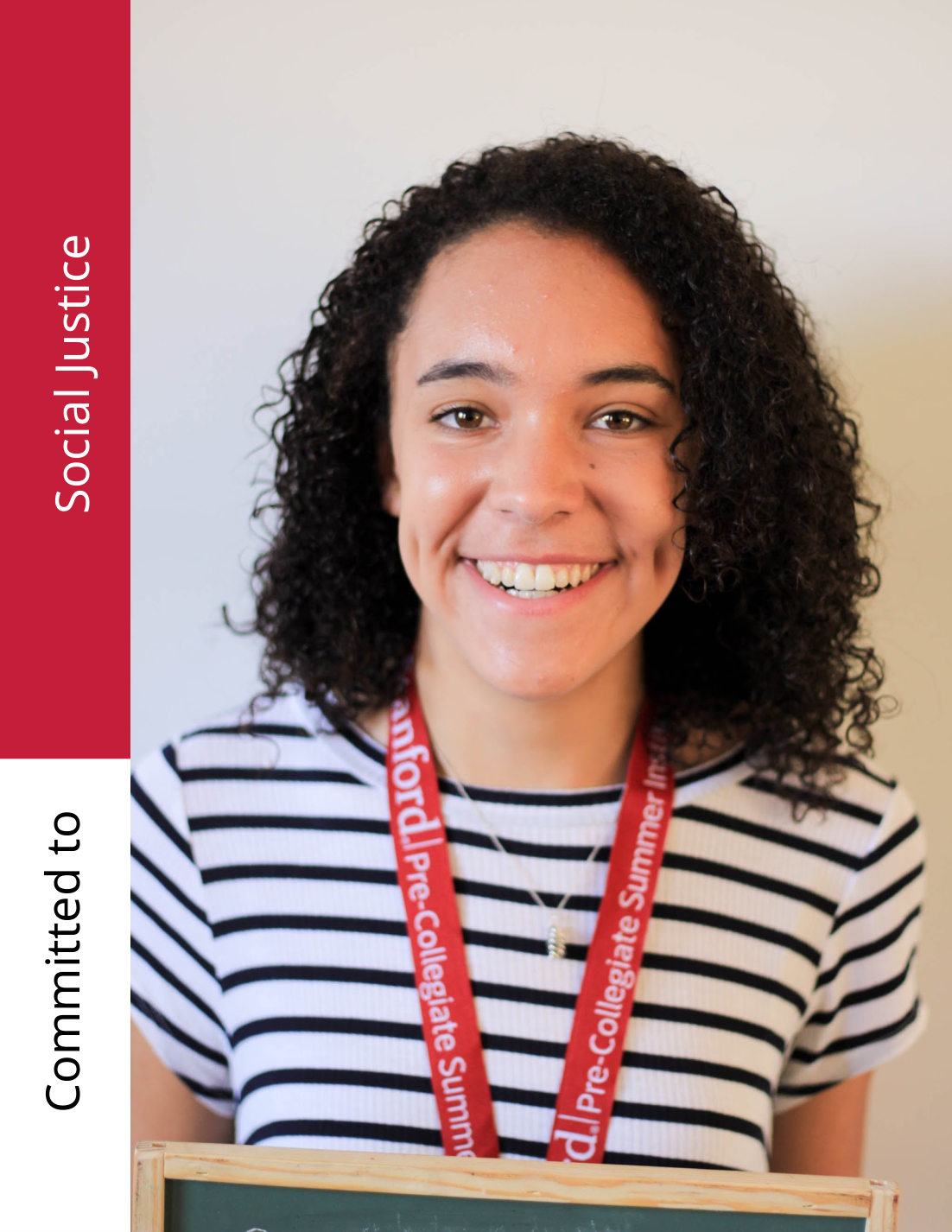
Original 2017 portrait page of Jasmine Davis

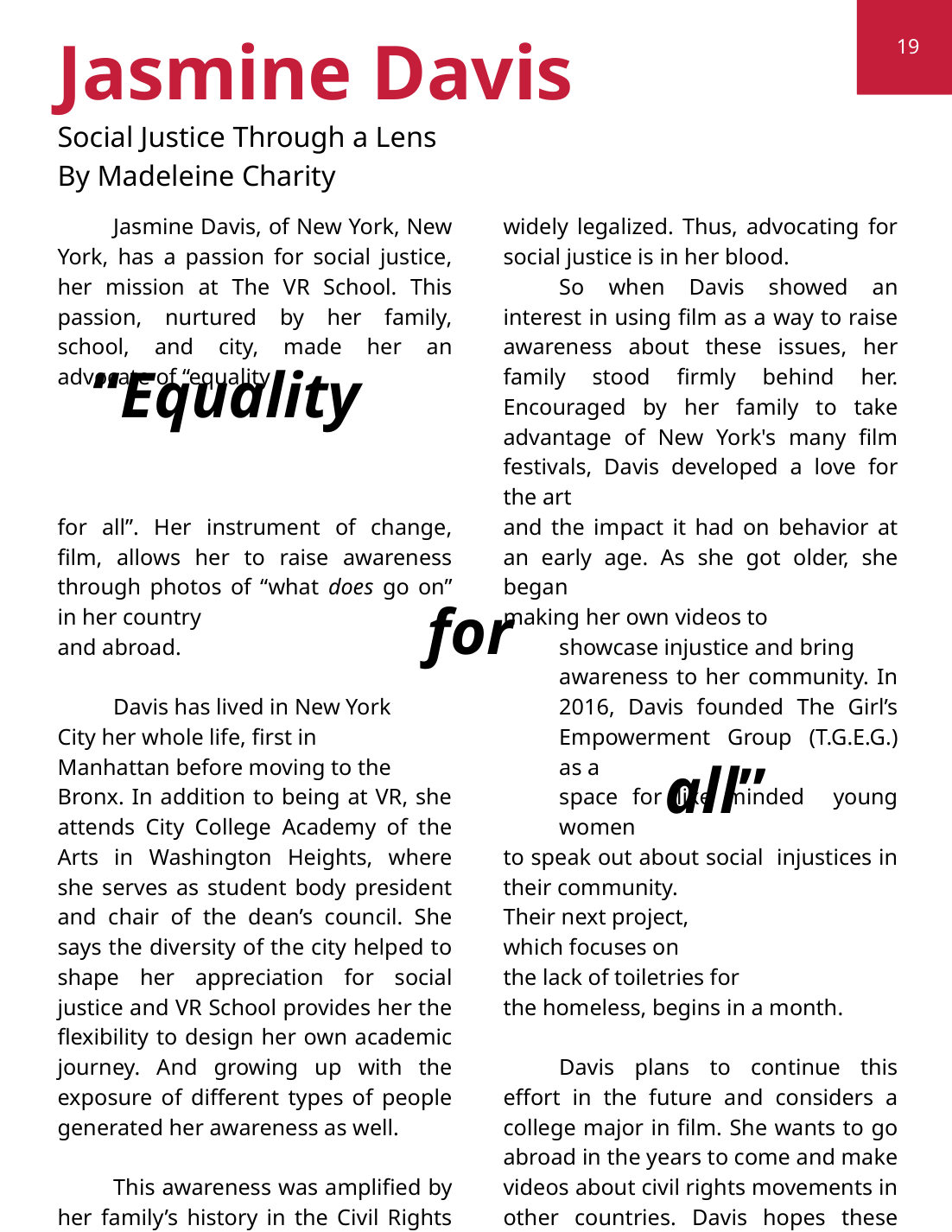
Jasmine Davis, of New York, New York, has a passion for social justice, her mission at The VR School. This passion, nurtured by her family, school, and city, made her an advocate of “equality

for all”. Her instrument of change, film, allows her to raise awareness through photos of “what does go on” in her country and abroad.

Davis has lived in New York City her whole life, first in Manhattan before moving to the Bronx. In addition to being at VR, she attends City College Academy of the Arts in Washington Heights, where she serves as student body president and chair of the dean’s council. She says the diversity of the city helped to shape her appreciation for social justice and VR School provides her the flexibility to design her own academic journey. And growing up with the exposure of different types of people generated her awareness as well.

This awareness was amplified by her family’s history in the Civil Rights Movement. Her maternal grandparents, African-American and German, wed in the 1960’s before interracial marriage was

widely legalized. Thus, advocating for social justice is in her blood. So when Davis showed an interest in using film as a way to raise awareness about these issues, her family stood firmly behind her. Encouraged by her family to take advantage of New York's many film festivals, Davis developed a love for the art and the impact it had on behavior at an early age. As she got older, she began making her own videos to showcase injustice and bring awareness to her community. In 2016, Davis founded The Girl’s Empowerment Group (T.G.E.G.) as a space for like minded young women to speak out about social injustices in their community. Their next project, which focuses on the lack of toiletries for the homeless, begins in a month.

Davis plans to continue this effort in the future and considers a college major in film. She wants to go abroad in the years to come and make videos about civil rights movements in other countries. Davis hopes these films will raise awareness and have an impact on the human community.

View the original article pageOriginal article page 19: Social Justice Through a Lens, by Madeleine Charity

Original student journalism, July 2017. Jasmine’s profile connects family encouragement, film and a commitment to social justice. Preserved source p. 19 ↗
08 · Original source p. 21

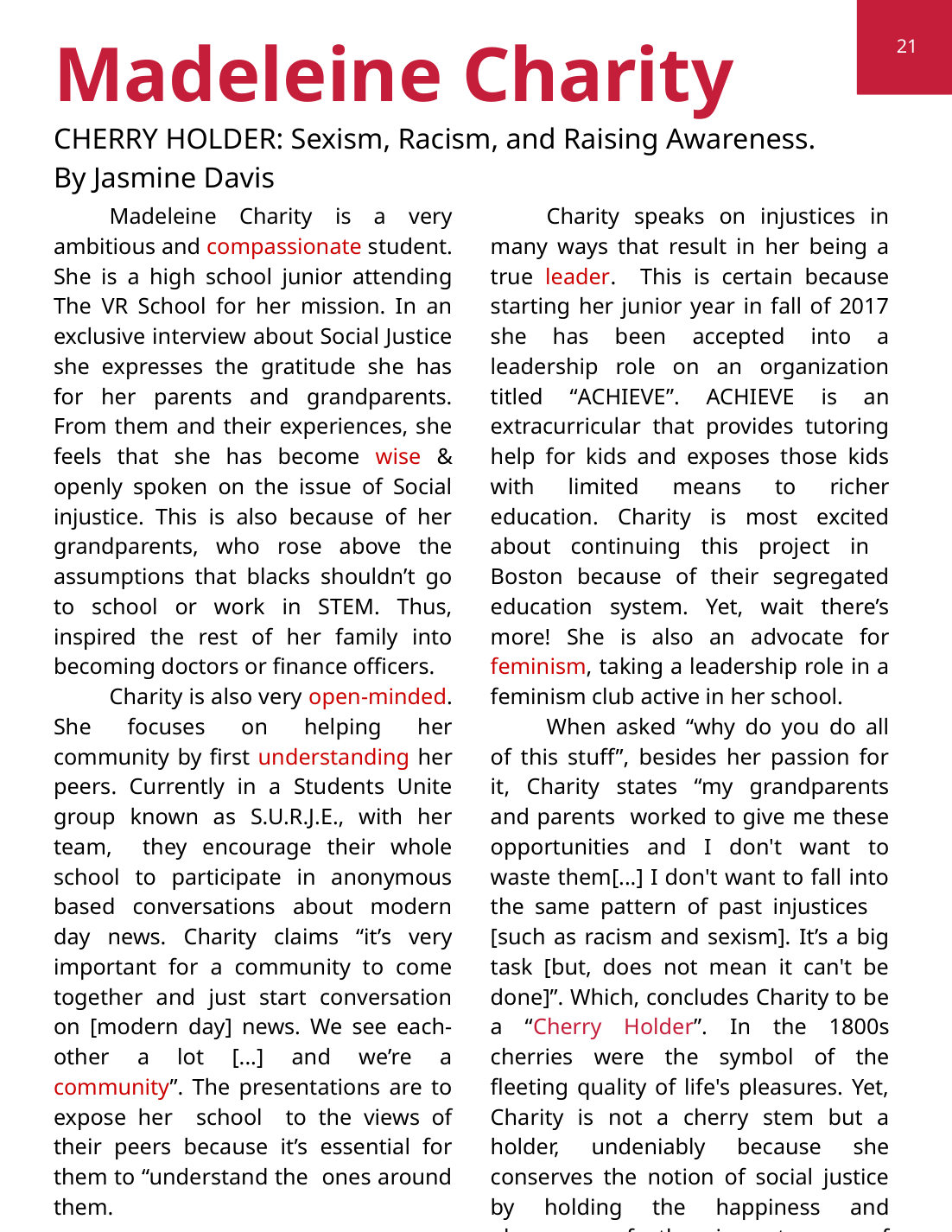
Madeleine Charity

CHERRY HOLDER: Sexism, Racism, and Raising Awareness.

Original 2017 portrait page of Madeleine Charity

Madeleine Charity is a very ambitious and compassionate student. She is a high school junior attending The VR School for her mission. In an exclusive interview about Social Justice she expresses the gratitude she has for her parents and grandparents. From them and their experiences, she feels that she has become wise & openly spoken on the issue of Social injustice. This is also because of her grandparents, who rose above the assumptions that blacks shouldn’t go to school or work in STEM. Thus, inspired the rest of her family into becoming doctors or finance officers. Charity is also very open-minded. She focuses on helping her community by first understanding her peers. Currently in a Students Unite group known as S.U.R.J.E., with her team, they encourage their whole school to participate in anonymous based conversations about modern day news. Charity claims “it’s very important for a community to come together and just start conversation on [modern day] news. We see each-other a lot [...] and we’re a community”. The presentations are to expose her school to the views of their peers because it’s essential for them to “understand the ones around them.

Charity speaks on injustices in many ways that result in her being a true leader. This is certain because starting her junior year in fall of 2017 she has been accepted into a leadership role on an organization titled “ACHIEVE”. ACHIEVE is an extracurricular that provides tutoring help for kids and exposes those kids with limited means to richer education. Charity is most excited about continuing this project in Boston because of their segregated education system. Yet, wait there’s more! She is also an advocate for feminism, taking a leadership role in a feminism club active in her school. When asked “why do you do all of this stuff”, besides her passion for it, Charity states “my grandparents and parents worked to give me these opportunities and I don't want to waste them[...] I don't want to fall into the same pattern of past injustices [such as racism and sexism]. It’s a big task [but, does not mean it can't be done]”. Which, concludes Charity to be a “Cherry Holder”. In the 1800s cherries were the symbol of the fleeting quality of life's pleasures. Yet, Charity is not a cherry stem but a holder, undeniably because she conserves the notion of social justice by holding the happiness and pleasures of the importances of integrity in a community.

View the original article pageOriginal article page 21: CHERRY HOLDER: Sexism, Racism, and Raising Awareness., by Jasmine Davis

Original student journalism, July 2017. Madeleine connects family opportunities with responsibility to her school and community. Preserved source p. 21 ↗
09 · Original source p. 23

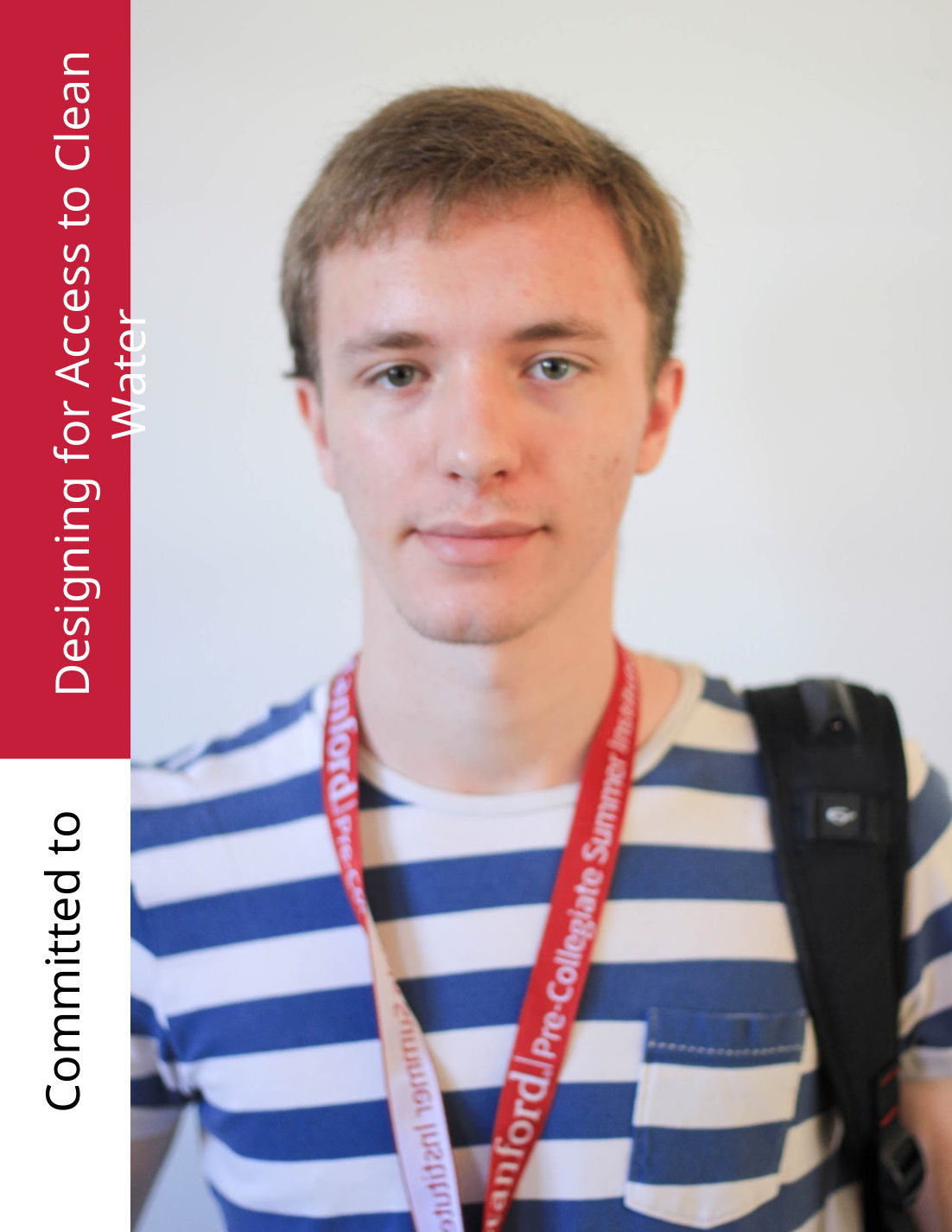
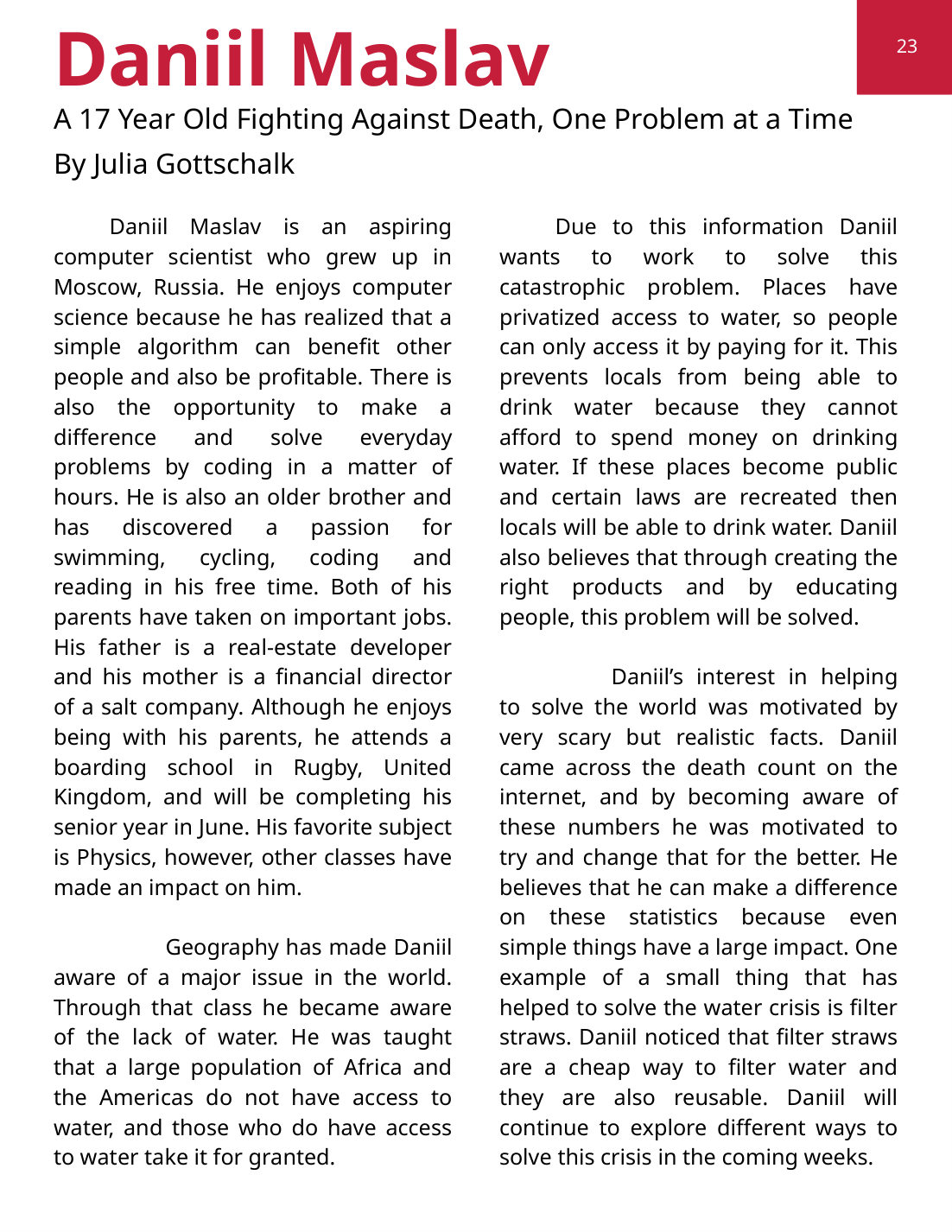
Daniil Maslav

A 17 Year Old Fighting Against Death, One Problem at a Time

Original 2017 portrait page of Daniil Maslav

Daniil Maslav is an aspiring computer scientist who grew up in Moscow, Russia. He enjoys computer science because he has realized that a simple algorithm can benefit other people and also be profitable. There is also the opportunity to make a difference and solve everyday problems by coding in a matter of hours. He is also an older brother and has discovered a passion for swimming, cycling, coding and reading in his free time. Both of his parents have taken on important jobs. His father is a real-estate developer and his mother is a financial director of a salt company. Although he enjoys being with his parents, he attends a boarding school in Rugby, United Kingdom, and will be completing his senior year in June. His favorite subject is Physics, however, other classes have made an impact on him.

Geography has made Daniil aware of a major issue in the world. Through that class he became aware of the lack of water. He was taught that a large population of Africa and the Americas do not have access to water, and those who do have access to water take it for granted.

Due to this information Daniil wants to work to solve this catastrophic problem. Places have privatized access to water, so people can only access it by paying for it. This prevents locals from being able to drink water because they cannot afford to spend money on drinking water. If these places become public and certain laws are recreated then locals will be able to drink water. Daniil also believes that through creating the right products and by educating people, this problem will be solved.

Daniil’s interest in helping to solve the world was motivated by very scary but realistic facts. Daniil came across the death count on the internet, and by becoming aware of these numbers he was motivated to try and change that for the better. He believes that he can make a difference on these statistics because even simple things have a large impact. One example of a small thing that has helped to solve the water crisis is filter straws. Daniil noticed that filter straws are a cheap way to filter water and they are also reusable. Daniil will continue to explore different ways to solve this crisis in the coming weeks.

View the original article pageOriginal article page 23: A 17 Year Old Fighting Against Death, One Problem at a Time, by Julia Gottschalk

Original student journalism, July 2017. A geography class helps Daniil identify access to water as a problem he wants to address. Preserved source p. 23 ↗

10 · Original source p. 25

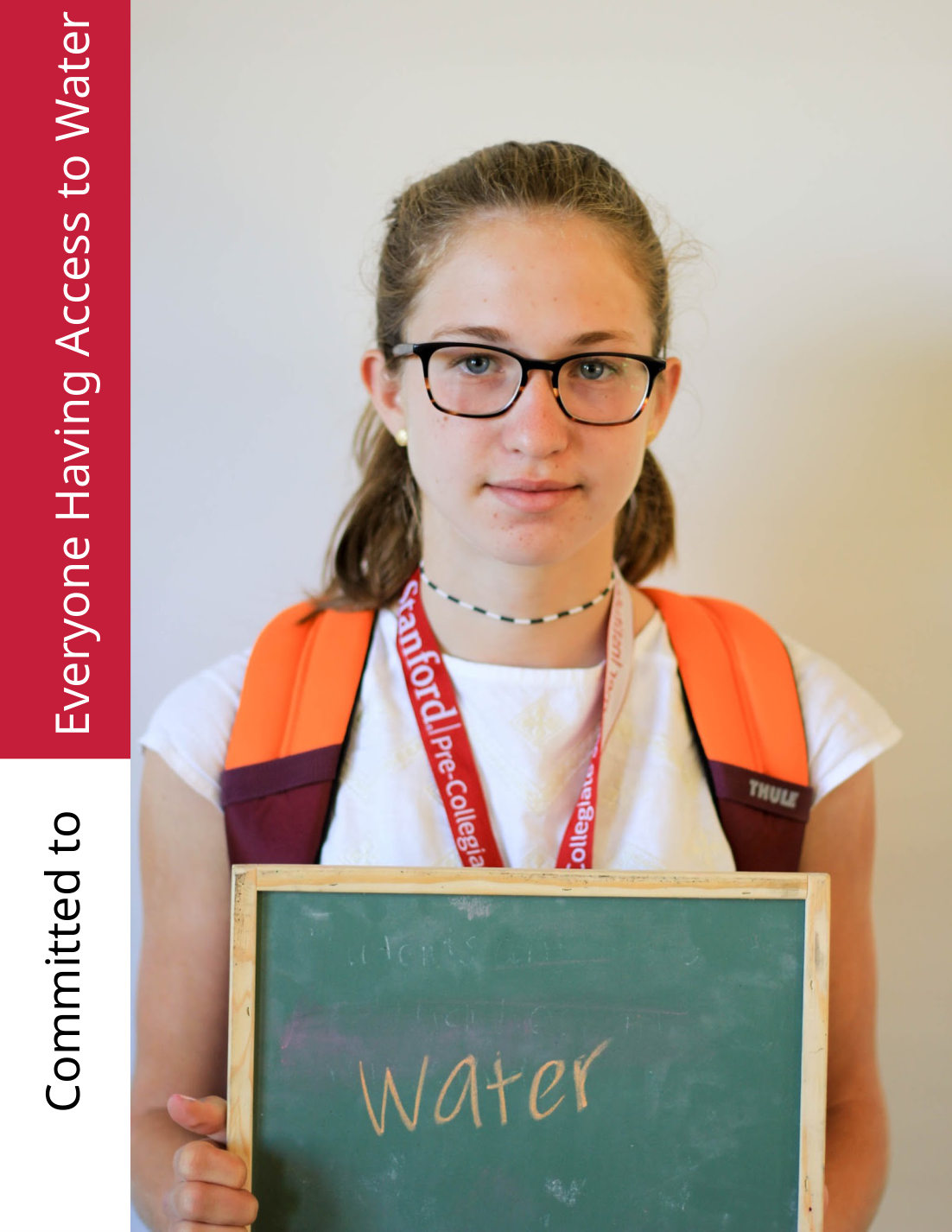
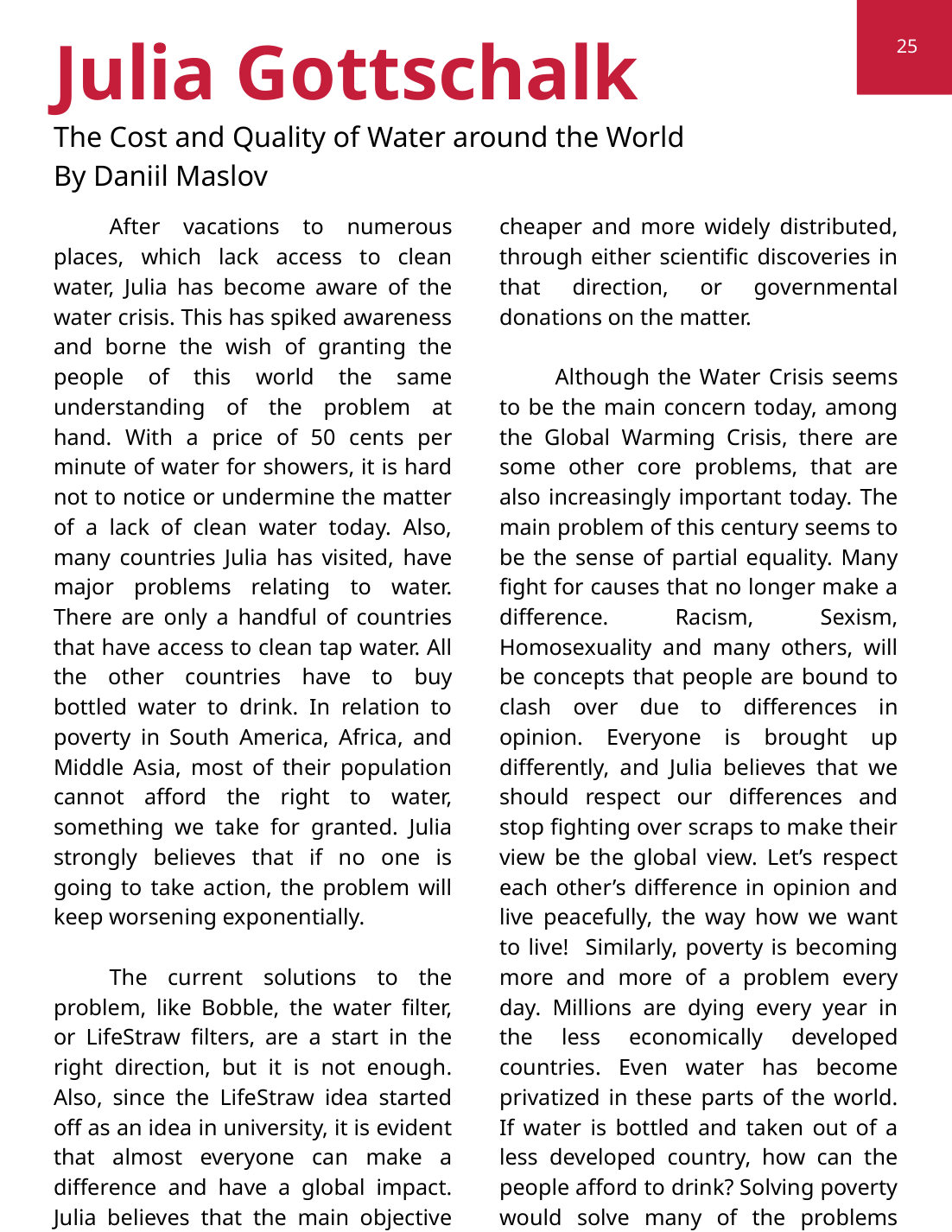
Julia Gottschalk

The Cost and Quality of Water around the World

Original 2017 portrait page of Julia Gottschalk

After vacations to numerous places, which lack access to clean water, Julia has become aware of the water crisis. This has spiked awareness and borne the wish of granting the people of this world the same understanding of the problem at hand. With a price of 50 cents per minute of water for showers, it is hard not to notice or undermine the matter of a lack of clean water today. Also, many countries Julia has visited, have major problems relating to water. There are only a handful of countries that have access to clean tap water. All the other countries have to buy bottled water to drink. In relation to poverty in South America, Africa, and Middle Asia, most of their population cannot afford the right to water, something we take for granted. Julia strongly believes that if no one is going to take action, the problem will keep worsening exponentially.

The current solutions to the problem, like Bobble, the water filter, or LifeStraw filters, are a start in the right direction, but it is not enough. Also, since the LifeStraw idea started off as an idea in university, it is evident that almost everyone can make a difference and have a global impact. Julia believes that the main objective today is working on making the current solutions

cheaper and more widely distributed, through either scientific discoveries in that direction, or governmental donations on the matter.

Although the Water Crisis seems to be the main concern today, among the Global Warming Crisis, there are some other core problems, that are also increasingly important today. The main problem of this century seems to be the sense of partial equality. Many fight for causes that no longer make a difference. Racism, Sexism, Homosexuality and many others, will be concepts that people are bound to clash over due to differences in opinion. Everyone is brought up differently, and Julia believes that we should respect our differences and stop fighting over scraps to make their view be the global view. Let’s respect each other’s difference in opinion and live peacefully, the way how we want to live! Similarly, poverty is becoming more and more of a problem every day. Millions are dying every year in the less economically developed countries. Even water has become privatized in these parts of the world. If water is bottled and taken out of a less developed country, how can the people afford to drink? Solving poverty would solve many of the problems today.

View the original article pageOriginal article page 25: The Cost and Quality of Water around the World, by Daniil Maslov

Original student journalism, July 2017. Julia’s account begins with travel and develops into questions about the cost and distribution of clean water. Preserved source p. 25 ↗

11 · Original source p. 27

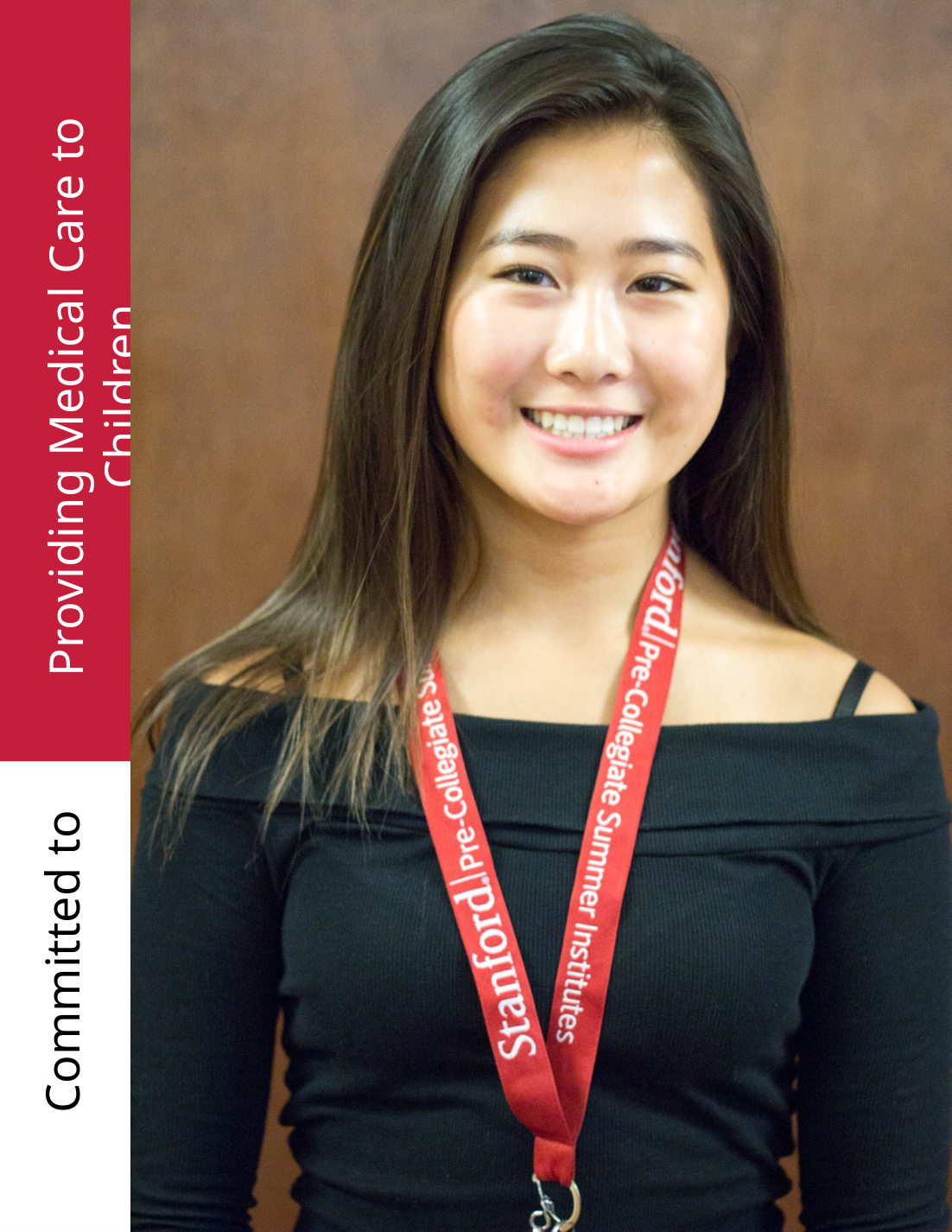
Emily Gao

Fighting Poverty with Medicine

Original 2017 portrait page of Emily Gao

Obamacare has been repealed and ordinary US citizens no longer have access to affordable healthcare. A little boy born with a congenital heart defect has gotten a series of 5 open heart surgeries under Obamacare. Just one more surgery is needed to fix his fragile heart, however this surgery is no longer feasible. “Why?” Emily Gao asks. “This little boy cannot get the surgery because his family can’t pay for it out of pocket; his family does not have access to affordable medical care without Obamacare. He lies in the hospital room in a building full of doctors and heart surgeons with all the medical devices and technology he needs to receive his surgery, but the invisible barrier of money and politics prevent him from doing so,” she informs me. She continued, “In a resourceful and powerful country like America, a little boy is made powerless through invisible and intangible barriers, which is very frustrating to the victims of disease and injury.”

Emily told me that all of us have access to affordable health care, we don’t have to worry about being healthy and that gives us the privilege to worry about other issues such as LGTBQ equality and getting into college.

Kids like us are privileged, we are allowed to experience life to the fullest because of our medical security. She asks me, “Why should children, all over the world, not be given the gift of experiencing life, while being forced to live one?” Science and technology are progressing faster than ever now due to our abundance of resources, especially in California. But what about the rest of the world, and countries that don’t have resources like America? Emily insists that the resources already exist in this world to provide basic medical care to everyone. If we have the resources to help people, and provide medical care, then why aren’t we doing so? Emily is determined to find out how we can gather the resources to provide everyone, especially children all over the world, with basic medical security.

“The world is so large, that it’d be very hard to treat all the children in the world. Is it possible to quantify your goal? How do you know you’ve made a difference?”

“I hope to be able to change at least one family’s life in a positive way by giving them access to health care.”

View the original article pageOriginal article page 27: Fighting Poverty with Medicine, by Meghana Manepalli

Original student journalism, July 2017. Emily states a bounded aspiration to help one family. The opening policy assertion and unnamed medical account remain attributed to the 2017 article, not independently verified here. Preserved source p. 27 ↗

12 · Original source p. 29

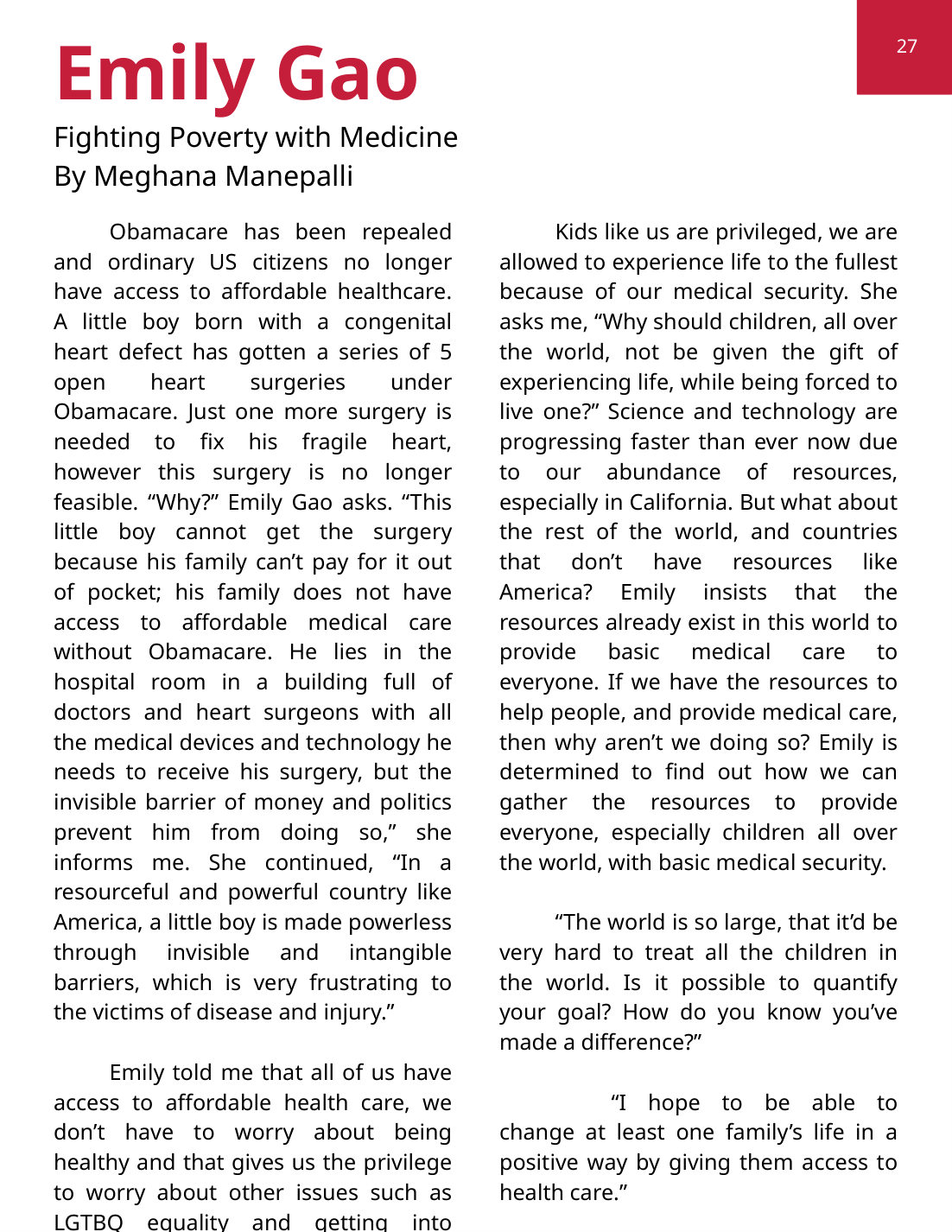
Meghana Manepalli

A New Way to Save Lives

Original 2017 portrait page of Meghana Manepalli

Coming from a country that has morals and standards that differ greatly from the ones in the US, Meghana Manepalli can't help but compare the two countries. She explains to me how often times in India people will witness children being kidnapped for money or slavery, but few can do anything about it. This is a saddening phenomenon, however it happens all over the world and many people remain unaware. “When I lived in India, I didn't think twice about situations like these,” Meghana states to me. Diseases like polio and malaria are still rampant in developing countries. Meghana has lived in both countries and has experienced both realities; she is determined to do something about it.

Meghana has a unique and compassionate interest in the field of genetic engineering. She tells me she wants to “use this field of science to further medicine in order to eradicate diseases from third world countries”.

She is aware of the stigma and controversy that surrounds genetic engineering, and hopes to communicate the importance of genetic engineering and bioinformatics as a medicine. She knows that governments might create rules and regulations for genetic engineering. Despite these obstacles, she is determined to make an impact through research.

“We can use the technique CRISPR to genetically modify mosquitoes to not carry certain viruses”. Diseases like Zika and Malaria are very common in many third world countries and take the lives of countless individuals each year. “Because genetic engineering will attack the cause of the disease, and not just treat the victims, this method of disease prevention might prove to be more effective than traditional methods.” Through procedures similar to these, Meghana hopes to better situations in third world countries. She hopes that the children of the future will be able to live long healthy lives, free of disease.

View the original article pageOriginal article page 29: A New Way to Save Lives, by Emily Gao

Original student journalism, July 2017. Meghana describes a research ambition in genetic engineering. Proposed methods and outcomes remain 2017 aspirations. Preserved source p. 29 ↗

13 · Original source p. 31

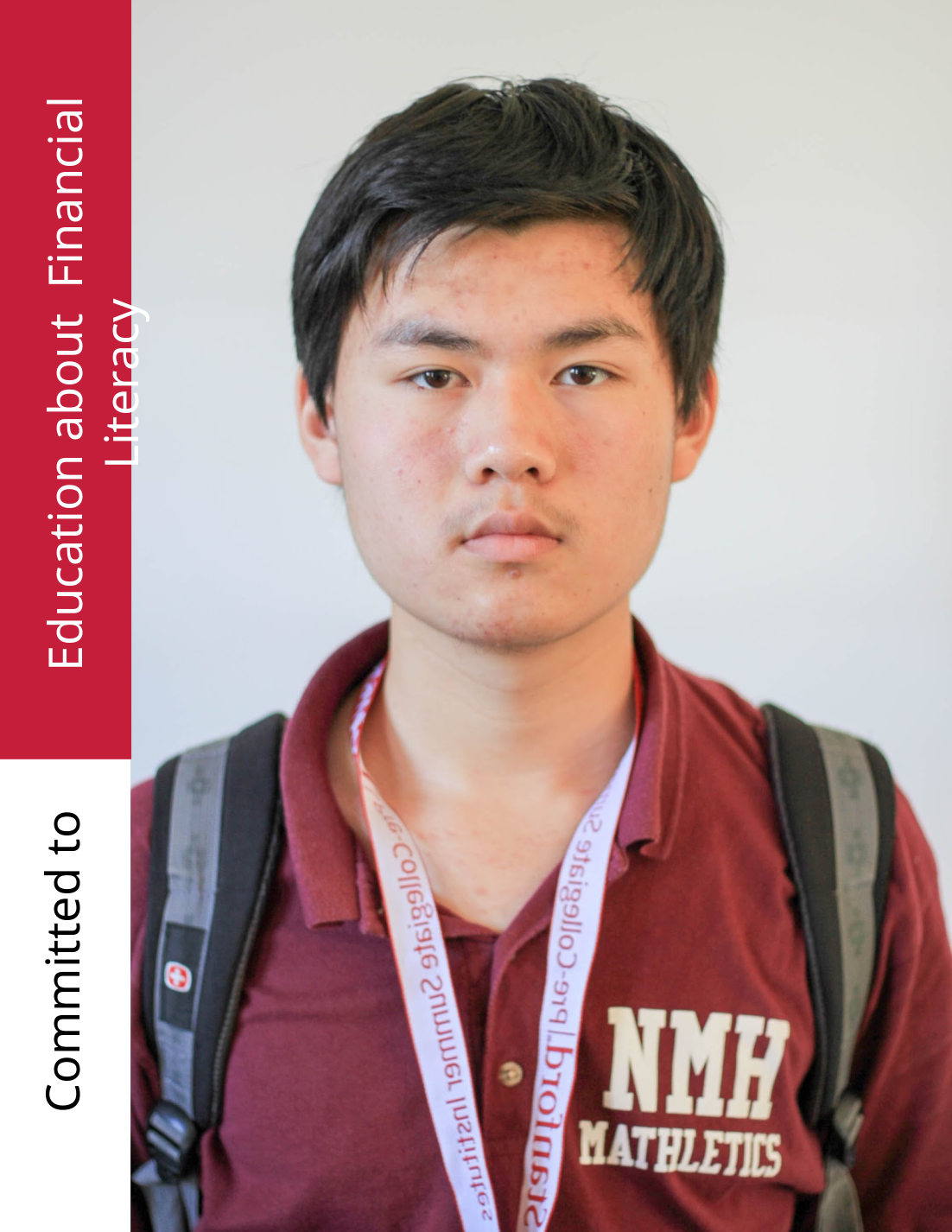
Tony Zhong

Financial Literacy to Change the World

Original 2017 portrait page of Tony Zhong

One of the most fulfilling things in life is to educate and share knowledge with others for the benefit of everyone. Giving people the tools to be in control of their own destinies is of pinnacle importance to human prosperity and the welfare of this nation and all other nations. But what often determines one’s place in life is having individual control over their money and their financial situation. That’s why the goal and dream of Tony Zhong, fifteen-year-old innovator and change-maker, is to bring education about money and ultimate financial literacy into the education system formally. Tony believes this ensures people to have the tools to control their own lives, and the freedom to make their own decisions.

Tony is originally from China, but studies in Massachusetts. His parents are both entrepreneurs who have inspired his love and interest for financial literacy. Many conversations with his parents about their businesses and the nature of money led him to a better understanding of finance. He has a passion for economics and finance that developed from these conversations around three years ago, which is when he first started to realize the serious lack of financial education among most people, even those with money.

“My friend recently spent $400 on a bracelet for a girl he has barely talked to, that was not a very financially intelligent decision”, Tony explained. Tony understands that needless spending and wastefulness with money throughout one’s life happens as a result of a lack of financial education, mainly in schools. His plan to change this fact and ultimately the way people live involves slowly introducing financial literacy in an extracurricular format in schools. His plan would start with simple concepts like budgeting and saving. Then working up to topics like investment and long-term income. By incorporating games and easy-to-use tech he looks to make learning about financial literacy easy and fun for everyone.

Many problems people have in their lives like instability or uncertainty in their future stem from a lack of financial literacy. In a country where 43 million people are impoverished, it is becoming more important than ever to teach everyone with money how to handle it so that growth and opportunities can be realized for all. As this young man continues to fuel and follow his passion for universal financial education, it will be exciting to see what he develops as it is sure to change the world.

View the original article pageOriginal article page 31: Financial Literacy to Change the World, by Nick Bost

Original student journalism, July 2017. Tony connects conversations with his parents to a plan for financial education. Preserved source p. 31 ↗

14 · Original source p. 33

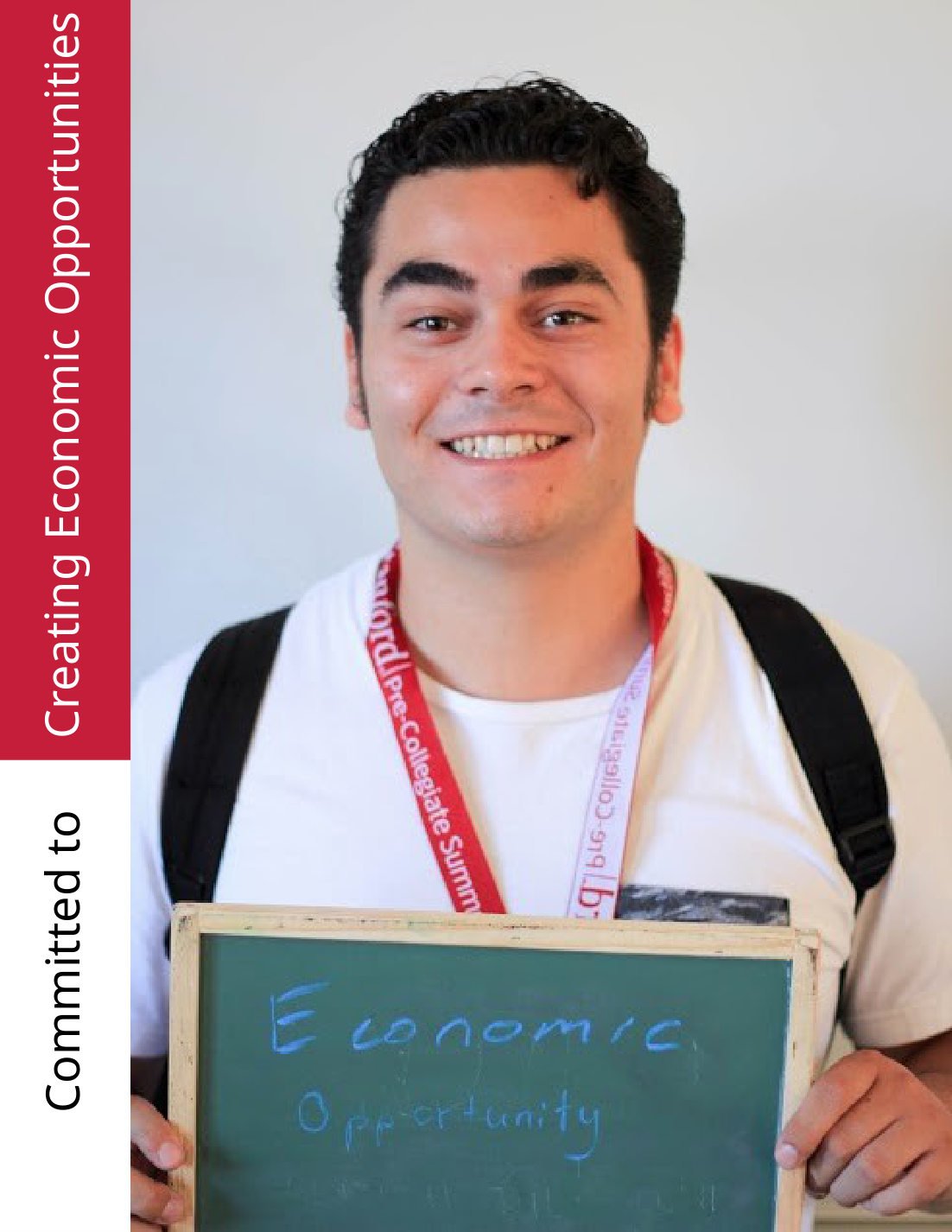
Nick Bost

Ambitious teenager seeks solution for lack of economic opportunities

Original 2017 portrait page of Nick Bost

Why are so many people dissatisfied with their jobs? And why are some of the hardest working people the poorest? According to a Forbes article, 52.3% of Americans are unhappy with what they do for a living. Many complain that they can’t work in fields which they are actually capable of or interested in. Nick Bost, 17, is a rising senior at Sage Hill School in CA who eagerly seeks to change this situation.

This summer, Nick participated in an Economics Institute at UCLA. “It was a wonderful experience. I started thinking about many things I had never imagined before”. At the camp, Nick became interested in problems relating to economic opportunities and employment. Driven by the fact that many people are underemployed and impoverished, Nick began doing extensive research, hoping to find a solution for his fellows in the society.

Nick attributes this problem of underemployment to the lack of education. “There are many people who take 2-3 jobs and spend almost all of their time working hard, but they still stay below the poverty line.” Nick believes that many people are indeed capable of earning an average income, but they are not well-equipped

with the necessary skillsets. “For example, many people who are interested in welding don’t know where to learn the appropriate metal-working skills, so they end up working in places like McDonald’s.” Nick thinks that before applying for the job that people want to do, people should first know where and what to learn.

With this thought in mind, Nick already has a plan for the future – he wants to create an online platform where professional education resources are shared. People who are interested in a particular job can go to Nick’s website, and the site will recommend schools or online programs to the users. Nick hopes his platform will help people acquiring the skills they need for their jobs. From Nick’s perspective, education is the cure for underemployment. Apparently, Nick is ready to make an impact on the society at a young age.

View the original article pageOriginal article page 33: Ambitious teenager seeks solution for lack of economic opportunities, by Tony Zhong

Original student journalism, July 2017. Nick’s economics programme opens questions about opportunity and access to skills. Preserved source p. 33 ↗

15 · Original source p. 35

Henry Gu

Solving the Problem of Food Waste

Original 2017 portrait page of Henry Gu

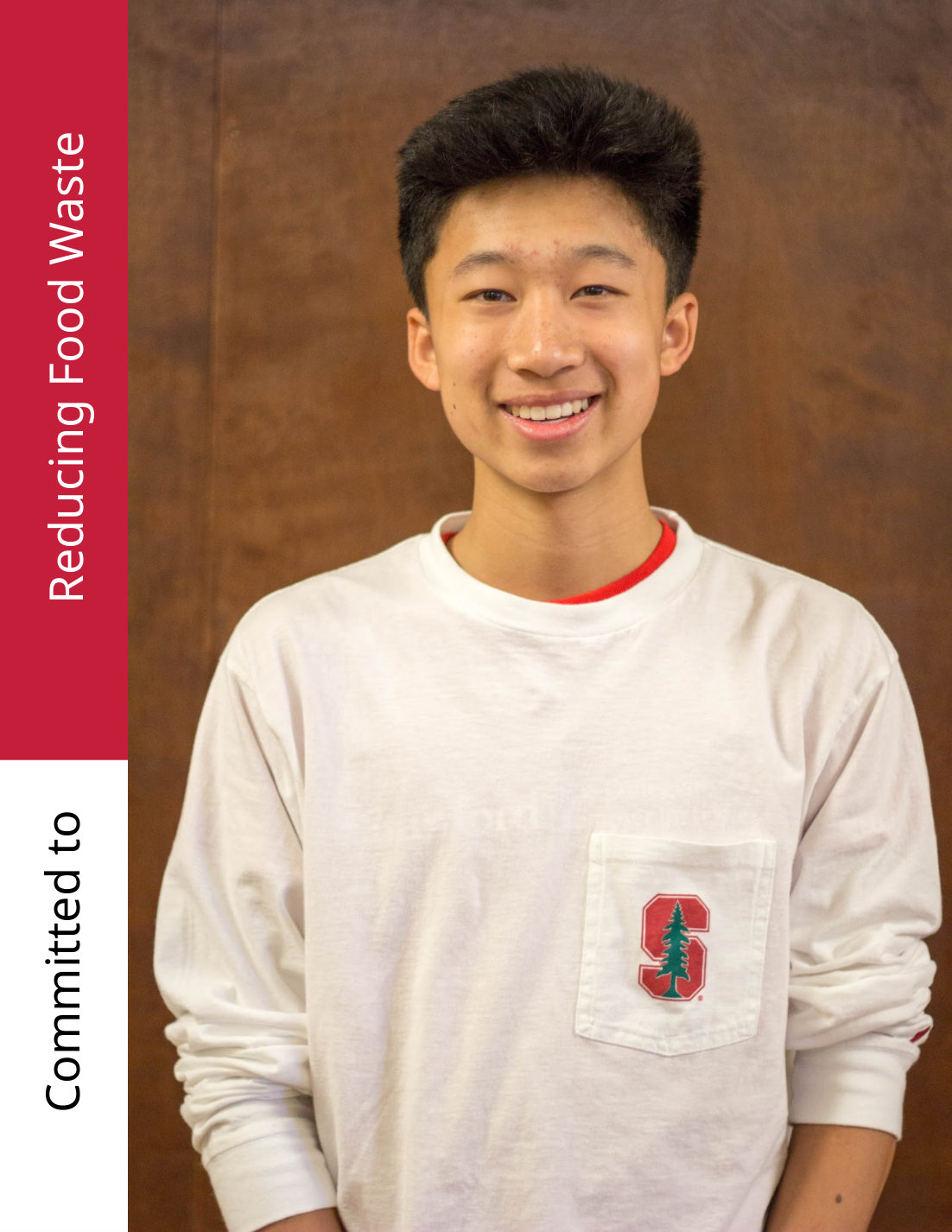
Henry Gu, a sixteen year old innovator has been exposed to the growing problem of food waste. His concerns stemmed from his family, and how they never got the correct amount of nutrition. This is a problem in many places, whether they be in first world countries or third world countries. The struggle to obtain food could be easily remedied if the amount of food wasted was lessened. Gu witnesses food being wasted often, whether that be at cafeterias, restaurants, or schools. The average American household wastes over two thousand dollars worth of food.

Each year, 1.3 billion tons of food are wasted. This is equivalent to around one trillion US dollars worth of food. This problem is growing every year, and we need to do something about it. Even a quarter of all wasted food could feed 795 million undernourished people.

Everyday, the average food retailer in the US, throws away 2,500 dollars worth of food. This food could have been easily provided to those in need. One of Gu’s solutions to this problem is a communication system, between food retailers and those in need of food. Through this program, food retailers could report when they were throwing out food, how much, and why. Depending on the amount of food and the reason for throwing it out, the impoverished could request for a delivery.

Gu advises to shop smart and realistically, and to only buy what you need. He also advocates that you keep your refrigerator and pantry organized and not cluttered. Even if they do get cluttered, Gu says you can donate extra food to farms or food banks.

With his previous experience in biotech as well as networking applications, Gu is well prepared to help diminish the amount of food wasted. He is also interested in using aerial technology, such as drones, to help transport the food that would be wasted to impoverished areas.

View the original article pageOriginal article page 35: Solving the Problem of Food Waste, by Stanley Wang

Original student journalism, July 2017. Henry connects observations of food waste with practical suggestions and a proposed communication system. Preserved source p. 35 ↗

16 · Original source p. 37

Stanley Wang

Solving Hunger in Rural Communities

Original 2017 portrait page of Stanley Wang

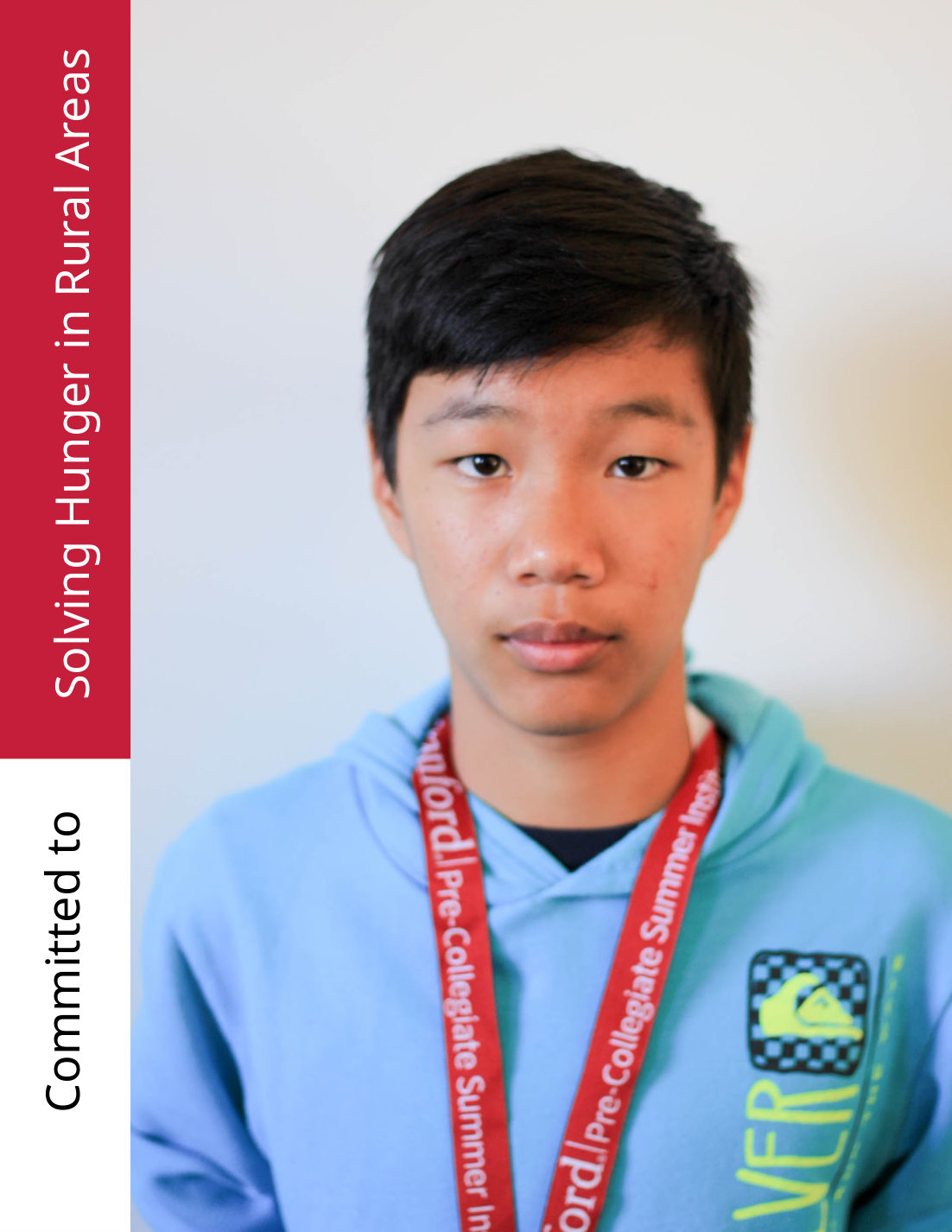
Stanley Wang is a 15 year old student from Phoenix, Arizona who grew up in a family of Chinese immigrants. His father grew up in a poor farming family, in which everyday was a struggle for a meal. This has inspired him to fight the problem of world hunger for people in rural areas like the one his family grew up in. As a member of the nonprofit organization freeCodeCamp, Wang is connected to a national community of activists who use coding in order to aid nonprofits and solve local community problems. This gives him access to a network of like-minded people to aid him in his cause. Stanley grew up loving to code, beginning his computer science career by programming games and applications such as calculators. He now has experience in multiple coding languages and has developed about 10 applications in order to support his vision. He is excited to pursue his passion to helping prevent rural hunger and plans to eventually expand to reach the lofty goal of stopping world hunger as a whole. World hunger is a terrible issue today, and is most commonplace in rural areas because of their lack of technology and wealth compared to more developed areas.

In order to solve this problem, Stanley plans to use modern transportation technology, to ship foods and seeds to aid these rural communities. Stanley will bring the technology over to these poor farmers, and will use this peace technology to give them food and help them grow crops more effectively. He plans to connect these impoverished areas with neighbouring areas that have a surplus of food and technology, facilitating food donations. He’s also passionate about using GMOs to improve the quality of crops in these rural areas. Using this technology, Stanley will be able to improve the size of the crop and their resistance to pests and weather in these specific rural areas, which would drastically improve.

View the original article pageOriginal article page 37: Solving Hunger in Rural Communities, by Henry Gu

Original student journalism, July 2017. Stanley connects coding and family history with a wish to address hunger in rural communities. Preserved source p. 37 ↗

17 · Original source p. 39

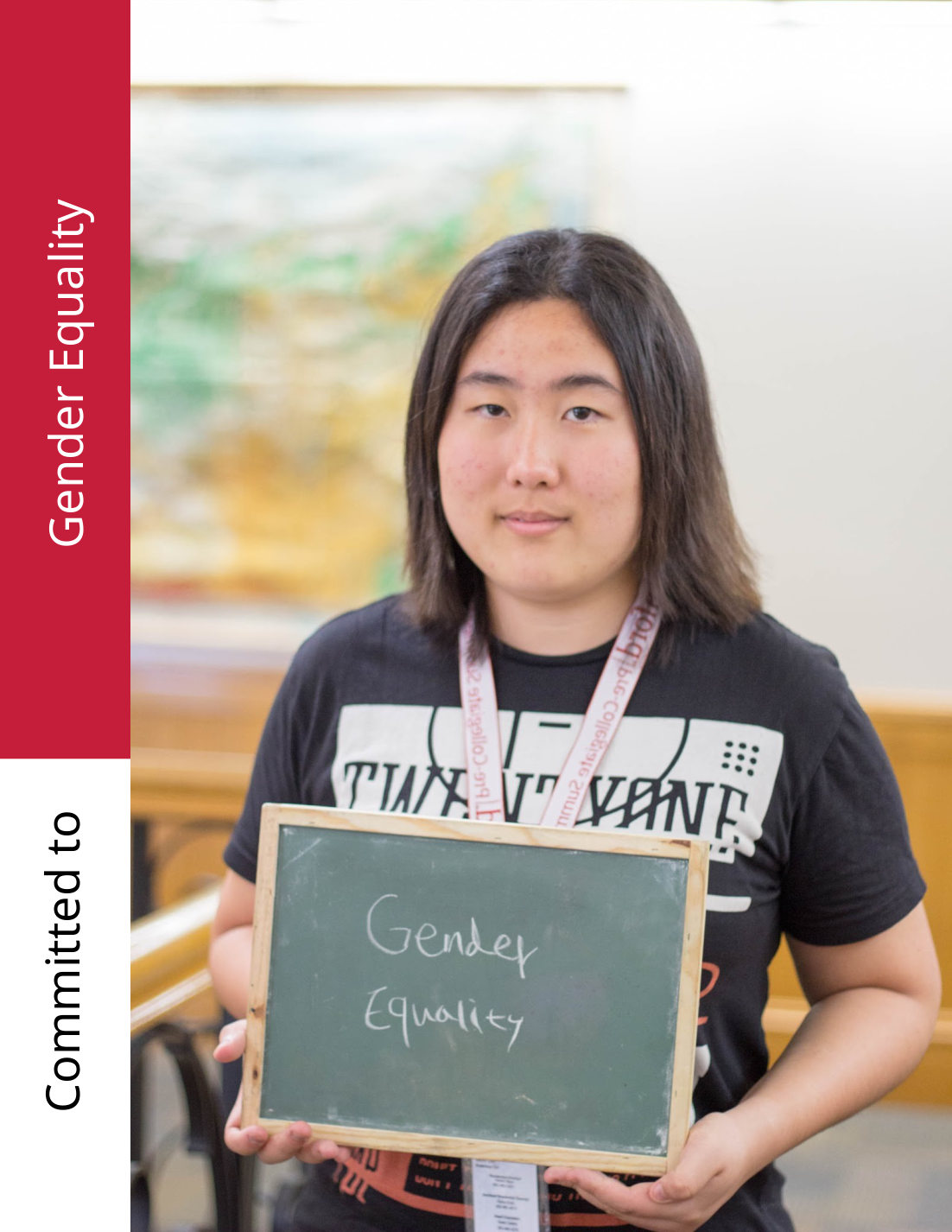
Lynn Kim

The Girl Striving for Gender Equality

Original 2017 portrait page of Lynn Kim

Lynn Kim, born and raised in South Korea, always had an aspiration for art and science. “I remember scribbling doodles on the walls of my parent’s bedroom. Art has always been my passion.” She came to America 3 years prior to the Summer program Stanford University to fortify her knowledge in these two fields in mind. She strives to gain more knowledge as a woman who wants to pursue her dream of utilizing both art and science to create the next step forward towards true gender equality in this world.

Lynn Kim believes that with the creative innovation that art itself brings and the connecting ability and nature of technology she can construct a foundation for which any people of whatever gender they identify with can come together and mutually respect each others ideas and perspectives. This could make the world a better place. “The power of innovation through combination of technology can be very impactful.” Lynn leaned towards the Stanford Summer Institute Pre-Collegiate

Program in 2017 for where she would take the Design as Discovery: Peace Technology and Design Thinking class because she thought it will be an integral part of her path she needs to walk on in order to achieve her goal of creating that inclusive gender mutual foundation.

Gender equality is simply for the ability for people to study and create anything they want without their born sex or identified gender becoming a handicap. “It should be about promoting equality for anyone with any gender.” This is unlike the many mixed and warped meanings of that are portrayed by social media from either sides such as that warped gender superiority complex. Lynn believes that certain genders should not have any more value than others, all of them should have to be laid on the same playing field and the way that people succeed in life is based off of their skills and what they know.

“GENDER EQUALITY”

View the original article pageOriginal article page 39: The Girl Striving for Gender Equality, by Michel Sidemion

Original student journalism, July 2017. Lynn brings art and science into a concern for gender equality and mutual respect. Preserved source p. 39 ↗

18 · Original source p. 41

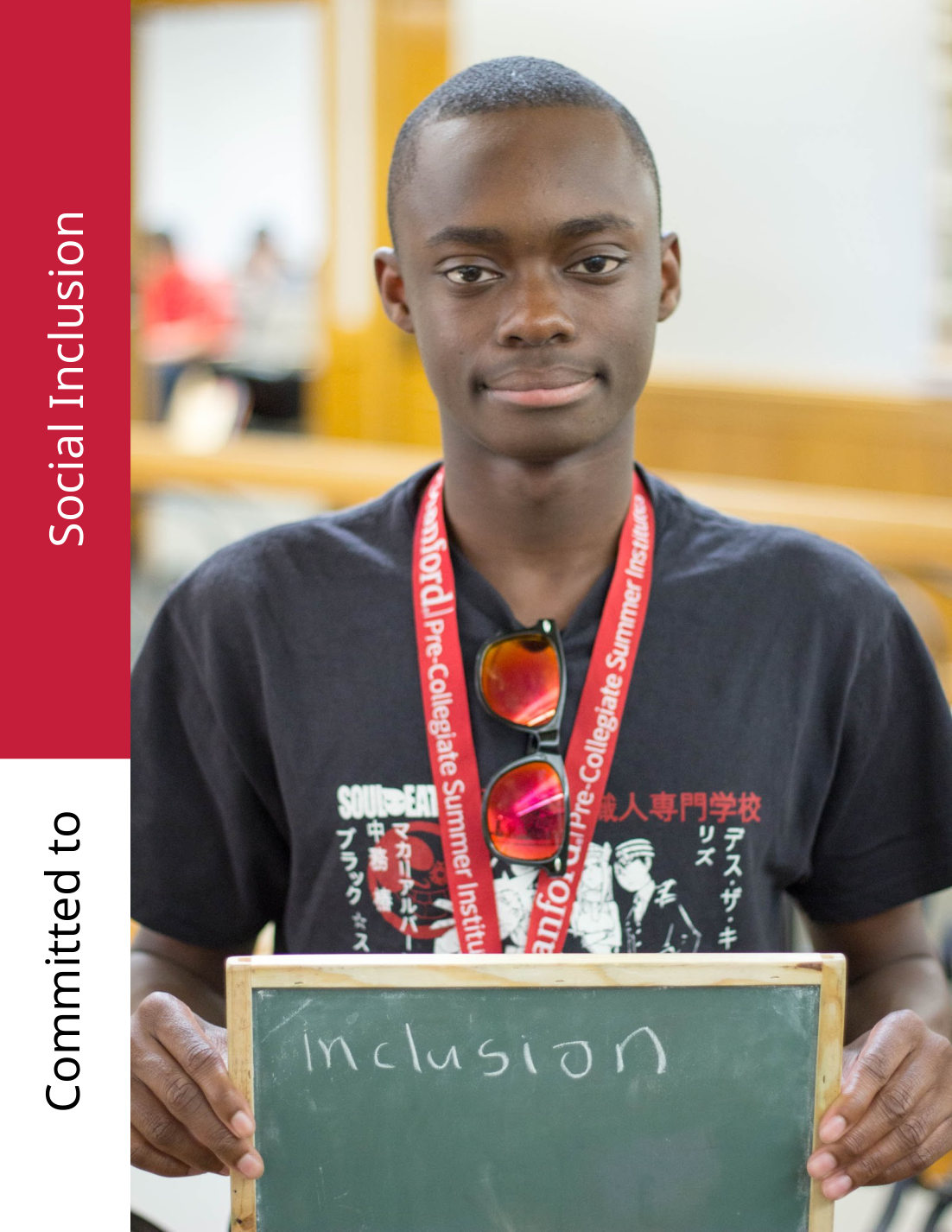
Michel Sidemion

About Inclusivity

Original 2017 portrait page of Michel Sidemion

Michel Sidemion was born in Togo, West Africa, but he came to the Bronx, New York City, USA when he was about three years old. With the diverse and colorful environment that New York City provides, he has been interested in “inclusive communication” for the most part of his life as long as he can remember. He was fascinated by how innovative technology can affect the society in transcending way by creating new ways to communicate and share ideas in international community.

“Inclusive communication is a communication among people where everyone’s idea is respected regardless of one’s values, political alignments, background, religion, belief, race, socioeconomic status, gender, or any other identities.” —Michel Sidemion, 2017

He stated that there were many biases and one-sided stories in news media throughout the history of the world. Consequently, some people are unable to or limited to express their ideas and opinion freely. This idea applies not only to news media but also affects the general society micro, such as school and/or work environment, to macro, such as a city and/or a country, scale. According to Sidemion, the goal of fostering inclusive communication can be reached by the combination of technology with innovation through programming with specific intention. This enhances imagination and creativity. He stated that this type of technology can give broader view point to people and can spur creativity to create better and effective interaction among diverse people. In Sidemion’s opinion, technology is there to connect people with each other, especially in this time of the era where more people have access to internet than people of any era before. It allows people to communicate ideas, share experiences with each other, and evaluate those ideas. This continuing advancement in technology helps to bring awareness to “inclusivity,” which is what Sidemion wants to promote.

View the original article pageOriginal article page 41: About Inclusivity, by Lynn Kim

Original student journalism, July 2017. Michel articulates a vision of inclusive communication. This is his recorded 2017 definition. Preserved source p. 41 ↗

19 · Original source p. 43

Sam Kovnar

Fixing the Inefficiencies in the US Education System

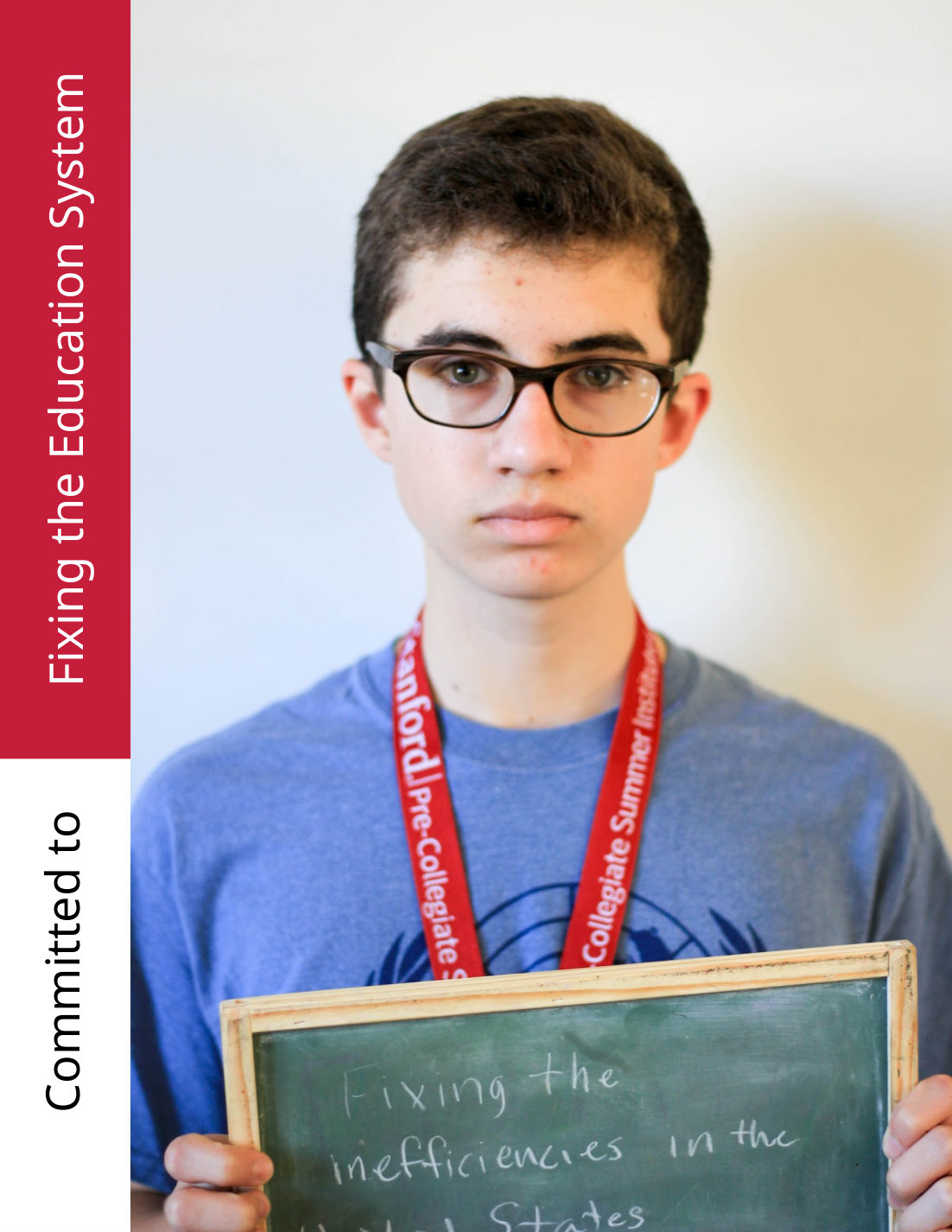
Original 2017 portrait page of Sam Kovnar

Sam Kovnar feels that there are a lot of things that the US does worse than other countries in education. For example, early start times, which research says are bad for students, still exist in many American schools. He found the issue by observing discussions on the internet and relating them to his own experiences. On the importance of education, Kovnar says that "better education leads to a more capable workforce, which makes it easier to solve other problems in the world." Some schools use a block schedule, where classes happen 3 times a week and 4 times a day, which gives students more freedom to manage homework and studying, and gives the teachers more time to teach in a single period. Kovnar believes that “[block scheduling] gives teachers more time to do extended activities, which couldn't be fit into a normal class period, and it breaks up the teacher's train of thought less, so it allows them to have a more continuous lesson plan, as opposed to every day having to think 'Ok where were we yesterday when we left off?' It reduces the number of breaks in the learning environment." Another issue Kovnar has identified is that teachers are paid very little compared to how important their jobs are.

"Paying teachers more would allow higher quality teachers to be brought into schools because more skilled teachers tend to ask for a higher pay, as they deserve, so a higher pay on average would increase the quality of the teachers in general, and better teachers tend to lead to better knowledge absorption,” he explained. “Higher teacher pay would require more government funding, so giving more money to education over, say, defense, would also help to increase the quality of education in America." Expanding on his earlier assertion about the importance of education, Kovnar stated that “Education is where we train the next generation of the workforce, and if we don't have people who can do all of the jobs that need to be filled, then our country can't function the way it needs to in order to solve other problems.” When asked what one change he would make if given the chance, Kovnar replied that he would make school year round, because it would be a big help to both teachers and students, as less break time means less time that has to be spent reviewing, so teachers can get right to teaching new material and the students can learn it faster.

View the original article pageOriginal article page 43: Fixing the Inefficiencies in the US Education System, by Lucas Schaberg

Original student journalism, July 2017. Sam examines school structures and explains why education matters to him. Preserved source p. 43 ↗

20 · Original source p. 45

Lucas Schaberg

Human Survival

Original 2017 portrait page of Lucas Schaberg

If we could solve one global issue with a snap of our fingers, what would it be? Terrorism? Drug abuse? Social justice? According to Lucas Schaberg, a rising high school junior, some issues are clearly more pressing than others

In his opinion, we should be most concerned with the “big issues concerning the survival of humans, not just as individuals but as a species.” We should be most concerned with protecting the human race and the planet from extinction from forces such as climate change, nuclear warfare, and the depletion of our fossil fuels.

“Although obviously there is a lot of injustice in the world, if we don’t stop climate change very soon it could end up making the planet unlivable.” Lucas Schaberg

Schaberg said that the most important of these is climate change because of how quickly our environment is deteriorating. Droughts, severe hurricanes, and rising sea levels are already threatening places around

the world, and it is clear that something must be done quickly. “We can figure everything else out later as long as we are all still here to do it.”

I also had the opportunity to talk with Lucas about his thoughts on artificial intelligence, or AI, and how he feels the field will change in the future. The development of AI and robotics has been surging in the last few years and will likely continue to do so. Will there soon be robots walking among us? It is hard to say. But we clearly need to develop policies to anticipate for any scenario.

“No one has actually built AI that can think for itself at a level equal to or greater than that of a human yet. And the worry is that if they do, we risk losing control of it very quickly.” In our increasingly digitized world, ‘smart’ appliances are becoming more and more common. Many fear that a free-thinking machine with access to the internet could become a serious threat. What’s more, a conscious robot able to comprehend itself would likely be able to build a machine smarter than itself, starting a rapid chain reaction of unpredictable development. “We need to be careful that whatever we develop has systems in place to make sure that it is safe.”

View the original article pageOriginal article page 45: Human Survival, by Sam Kovnar

Original student journalism, July 2017. Lucas’s 2017 interview places concern for human survival alongside questions about AI safety. Preserved source p. 45 ↗

21 · Original source p. 47

Artur Barbosa

Problem Solving Skills and How They Are Related to Education

Original 2017 portrait page of Artur Barbosa

Artur Barbosa is a Brazilian senior high scholar. He is determined to tackle one of the most important issues of underdeveloped and developing countries, which is education. In Brazil, for instance, education is a huge problem primarily when it comes to logical thinking and student`s involvement with extracurricular activities. Brazil stands out as being one of the ten best economies in the world, whereas it presents the Human Development Index (HDI) under 0.750, a low number compared to its economy. The students are not exposed to project development because of the education system, which values the ability of memorizing information more than problem solving. The challenge of changing such a reality is really difficult because it involves bureaucracy. Recently the Brazilian`s government has approved a constitutional amendment on its educational system. The new law changes topics such as class duration, mandatory subjects, implementation of new courses and so forth. Specialists state that these changes are not going to affect education in a positive way, since they do not help students to develop their intellectual capital and capacity.

Therefore, the unique way possible and viable to improve it, has to come from the students themselves or private initiative. Artur is founder and CTO of “Passei Facil”, a non-profit project aimed at supporting students to be accepted to the best universities and schools in Brazil. The project includes the presence of 22 volunteers. Passei Facil has helped over 15 thousand people just with its posted texts. Furthermore, the project offers mentoring from successful students from all over the country. The last application received more than 300 applicants. After all, he thinks we should focus on intellectual enrichment, and the only way to do it is empowering the students by giving them the skill that the world and the job market need: problem solving.

In order to create humans prepared for the world, they have to face the real current problems instead of learning the past ones, because the past solutions do not solve the future’s problems. An effective way of developing this kind of skill and making them prepared to the reality, is literally giving them the real problems of the world to solve. Artur thinks that the peace technology can make a huge impact in many student’s lives.

View the original article pageOriginal article page 47: Problem Solving Skills and How They Are Related to Education, by Artur Barbosa

Original student journalism, July 2017. Artur describes a student-led education project and argues for learning through real problems. Preserved source p. 47 ↗

Original page 50

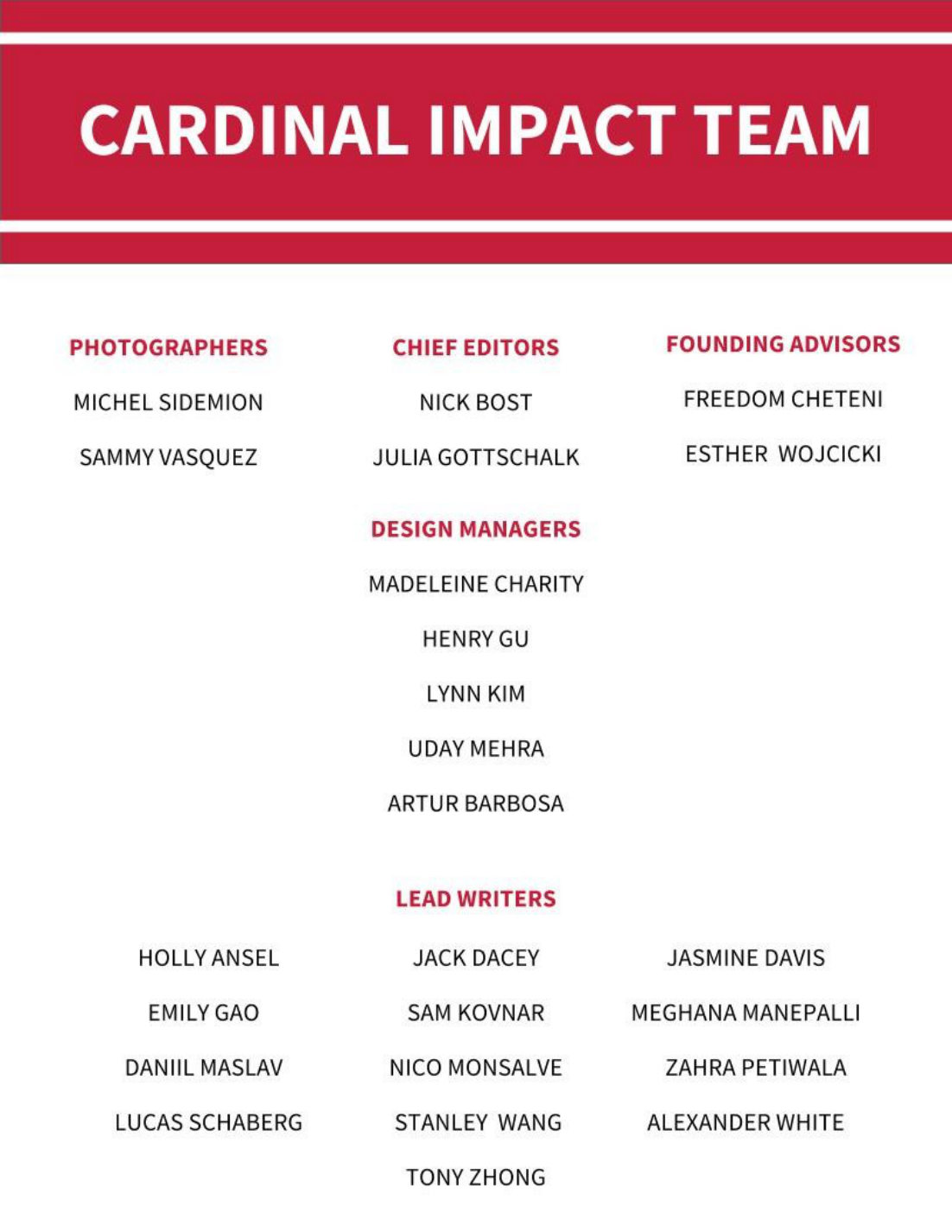
The Cardinal Impact team

Original Cardinal Impact team credits, including chief editors Nick Bost and Julia Gottschalk and founding advisors Freedom Cheteni and Esther Wojcicki

The original article about Daniil prints “Maslav”; the byline of Julia’s article prints “Daniil Maslov.” Both source forms are retained.

The complete source · All 52 pages, in order

Open the original magazine.